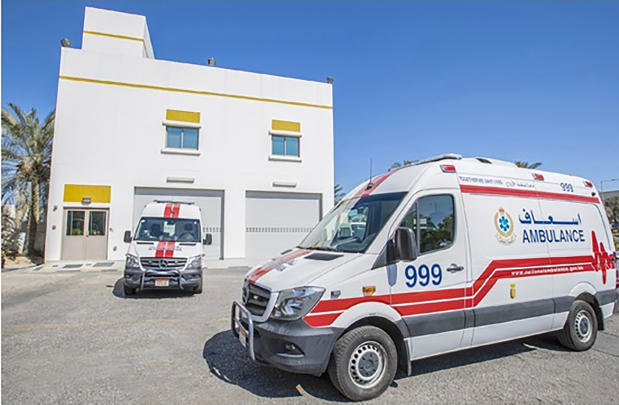

The National Ambulance Centre last year dealt with more than 60,000 emergency medical calls, providing emergency aid and primary healthcare services in all governorates of the kingdom.
According to a statement, the centre responded to the calls with not just ambulances that were deployed throughout the country, but also through the motorcycle first responder service, which was first launched in December 2024.
After more than one year since its deployment, the centre noted that the motorcycle responder service has contributed significantly to faster access to emergency cases.
It also showed to have more efficient patient preparation compared with conventional ambulances, particularly in narrow areas and during peak traffic hours.
“The centre handled around 60,635 emergency medical calls, classified across a range of cases, including resuscitation, road traffic accidents, fire-related incidents, childbirth, as well as other emergencies,” the centre said.
“This reflects the advanced level achieved by the centre in managing emergency medical calls.
“It is evidenced by the service attaining the international excellence accreditation in the Medical Priority Dispatch System (ProQA) from the International Academies of Emergency Dispatch (IAED).
“This is a direct outcome of an ongoing strategic plan, held in close co-ordination with the Interior Ministry, that aims to further enhance ambulance and primary healthcare services as a core component of Bahrain’s comprehensive healthcare system.”
The centre revealed that last year, it has managed to achieve a wider community coverage and a more efficient handling of a larger volume of emergency medical calls.
Ambulance crews were also able to ensure rapid, safe and proper response in line with internationally-approved medical standards and protocols, and in co-ordination with emergency departments in government hospitals and relevant security entities.
The number of first responder riders in Bahrain has not been revealed, based in more than a dozen ambulance centres across the country – including Salmaniya Medical Complex, the Bahrain Defence Force Hospital in Riffa and King Hamad University Hospital in Muharraq – to allow them to reach any accident location across the kingdom with relative ease.
Each motorcycle is equipped with the latest medical devices and equipment, including a defibrillator, blood pressure monitor, blood glucose monitor, oxygen monitor, oxygen cylinder, fracture kits, trauma emergency kits, thermometer and flashlight and night vision equipment.
First responders can handle cardiac and respiratory arrests, accidents, injuries, bleeding, convulsions, drowning, severe choking, fainting, hypoglycemia and even emergency childbirth.
All first responders are qualified paramedics and hold the necessary credentials.
The service was rolled out after it emerged as one of the winning ideas in the Government Innovation Competition (Fikra) in 2023.
For a first responder to be deployed, people should call 999 in case of an emergency. The report will be transferred to the National Ambulance Centre’s operations room.