

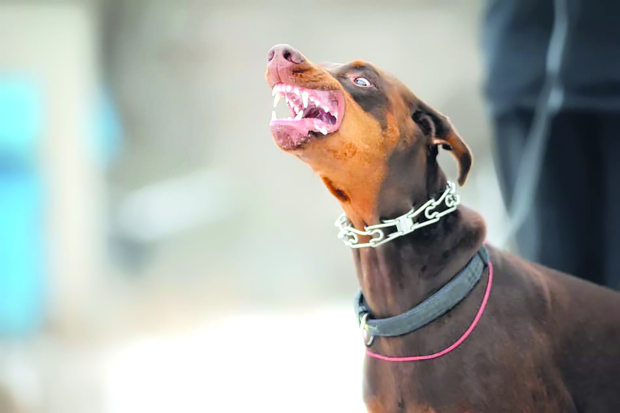
People who own exotic and potentially dangerous pets, including breeds of dogs such as pit-bull terriers and mastiffs, without a licence could be jailed for life and fined up to BD70,000 under a new proposed law.
Five legislators led by Parliament’s financial and economic affairs committee chairman Ahmed Al Salloom have drawn up the Dangerous Animals’ Possession draft law, which prohibits ownership of several animals without official authorisation.
The bill would see breeds of dogs such as pit-bull terriers, tosa and mastiffs classified as ‘dangerous’. Rottweilers, doberman pinschers and boxers may also come under the same category.
The MPs believe such animals could be used to spread fear or even aid or assist in criminal activities.

Mr Al Meghawi
According to the draft law, dogs taken for walks should remain on a leash or else inspectors would have the power to seize and take appropriate action that would be determined through by-laws.
A registry would also be set up detailing where the animal was bred, its type, colour, identifying marks, vaccine records and electronic chip barcode, alongside the owner’s name, identity number, age, nationality and place of residency.
Possessing certain dog breeds without a licence, and reckless handling of licensed canines, could lead to fines of between BD1,000 and BD10,000 under the law.
Using a ‘dangerous’ animal to cause permanent injury would lead to the owner facing jail for three to seven years. Should the attack cause minimum injury, then it is a year in jail, or a fine of between BD1,000 and BD40,000, or both. However, if it leads to death, the punishment would be life in jail.
In all cases, the animal would be seized and subjected to tests to determine the gravity of threat.
The Muharraq Municipal Council approved the proposed legislation tabled by Municipalities Affairs and Agriculture Minister Wael Al Mubarak on behalf of the MPs. It will be now referred back to Parliament’s public utilities and environment affairs committee.

Mr Al Mubarak
The bill is awaiting approvals from the Southern and Northern Municipal Councils and the Capital Trustees Board following the addition of punishments to an earlier version.
Monkeys, wolves, hippos and rhinos have been added to the dangerous list, alongside rodents, with only domesticated hamsters being exempted.
Banned species of birds include vultures, seagulls and penguins.
Reptiles classified as dangerous or protected by law include all types of crocodiles – once suggested to having been smuggled into the country as eggs and later released into the wild when they grew too large – as well as leopard lizards and venomous snakes.
Among banned invertebrates that cannot be reared as pets are all types of spiders and scorpions.
In his written explanation to the councils and the board, Mr Al Salloom said the proposed legislation would help regulate and organise the possession of animals so they don’t spread fear or disease amongst the community.
“There are people who breed dogs in their homes or farms for profit and introducing licences will help put an end to this out-of-control situation,” he said.
Mr Al Salloom said the general law focuses on dangerous, rare, protected and disease-riddled species that shouldn’t be allowed into Bahrain.
The UK introduced the Dangerous Dogs Act in 1991 prohibiting or restricting certain types of canines and codifying the criminal offence of allowing a dog of any breed to be dangerously out of control.
“The animals we have listed or noted are banned across several countries because of the dangers they pose,” added Mr Al Salloom.
Meanwhile, the council’s financial, administrative and legislative committee chairman Ahmed Al Meghawi said the proposed law would help regulate the ‘highly chaotic’ sector.
The draft law states that anyone using a dangerous animal to spread fear among people will be jailed for up to a year, or fined between BD10,000 and BD70,000, or both.
Possession of dangerous animals carries jail time of between one month and six months, or a fine of between BD10,000 and BD50,000, or both.
Possessing dangerous animals with an intent to sell would lead to jail term of up to a year, fines of between BD5,000 and BD50,000, or both.
Those violating the licence to raise such animals by providing suitable food and shelter will be fined between BD1,000 and BD50,000.
Acceptable breeds would be identified in bylaws following the issuance of the law.
mohammed@gdnmedia.bh
Top stories for today:
HIGHWAY TO PROGRESS: The Muharraq Ring Road was opened yesterday
Call to extend dates of popular events
Bahrain set to undergo major urban redesign
&uuid=(email))