

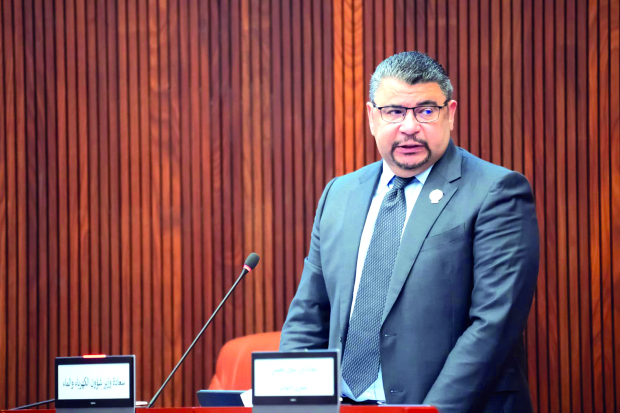
BAHRAIN is drawing up a multi-pronged strategy to develop the electricity and water sector.
Electricity and Water Affairs Minister Yasser Humaidan told MPs, in writing, that the ministry was charting out policies in partnership with the Electricity and Water Authority (EWA).
It aims to achieve fiscal balancing, revamp the sector’s infrastructure, improve the quality of operations and consumer services, and attract national professionals and manpower.
Mr Humaidan clarified that the government was not working to privatise the sector, but rather organise it better, through a new legislation that would regulate work.
“The legislation will be accompanied by procedures to segregate maintenance and operations from monitoring and accountability,” he added.
“The same approach is being done across the GCC to separate the operational role from the regulator,” he added.
“Here, this will all come with protection to consumers’ affairs and without any employee in the sector being affected.”
Mr Humaidan said an independent body would be launched to monitor all services as the sector opens its door to investments.
“There won’t be any social or economic impact on citizens, who will continue to be provided with subsidised electricity and water in the households through a government commitment,” he said, in a written response to a question by MP Dr Mariam Al Dhaen.
“It is an organisational process and has nothing to do with privatisation.”
Meanwhile, responding to another question by MP Dr Mahdi Al Shuwaikh on the newly-formed Electricity and Water Holding Company, Mr Humaidan said the firm has been set up to allow the government, or the EWA, to own shares in production companies that would enter the sector in future.
“The company has no production or production operations and has been set up purely to invest fully or partially in the sector or related fields,” explained Mr Humaidan.
“We don’t have any operational costs calculated or estimated and since it has been launched for a precise task, as a holding company, its annual spending would be minimal and administrative,” he added.
“The company will be fully owned by the government of Bahrain. It doesn’t interfere in electricity and water rates or subsidies directed to national households, as clearly stated.”
Mr Humaidan will be present during the weekly session on Tuesday for further queries from both MPs.
Meanwhile, Justice, Islamic Affairs and Endowments Minister Nawaf Al Maawda will also attend the session to respond to questions by three MPs on religious affairs.
“There are 21 mosques in Capital Governorate constituency one, out of which 17 don’t need extensive maintenance. Three are in need of maintenance, with budget for two allocated this year. One mosque has to be demolished and reconstructed,” said Mr Al Maawada, in a written response to area MP Mohammed Hussain Janahi.
He also revealed that 13 locations have been earmarked for worship places in the new East Sitra Housing Town.
“Artist impressions for two mosques and a ma’atam have been completed and are in the process of getting relevant approvals for work in the first phase,” said Mr Al Maawada.
“The second phase will include two mosques, one of which will be the largest in the town, and consultants have been directed to work on the necessary designs.”
&uuid=(email))