

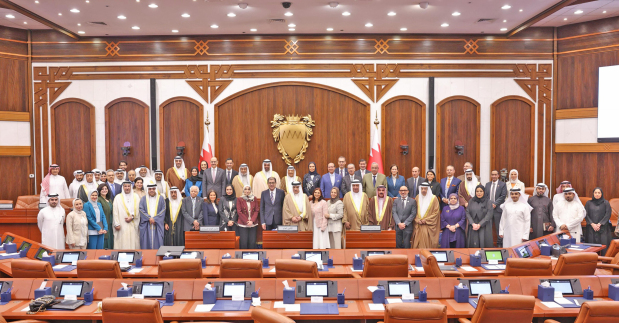
Bahrain's budget for 2025-2026 reflects a significant shift towards diversifying revenue sources, with non-oil revenues to surpass oil revenues for the first time next year.
An infographic presented by Shura Council financial and economic affairs committee chairman Khalid Al Maskati shows the revenue breakdown.
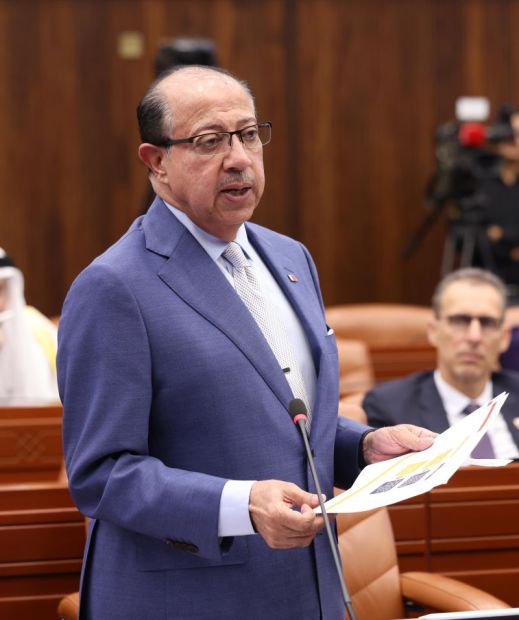
Mr Al Maskati
This year, oil revenues are projected to account for 51 per cent of the total income, with non-oil revenues contributing the rest.
However, by next year, the balance is expected to shift, with non-oil revenues making up 53pc and oil revenues declining to 47pc.
“This marks a turning point in Bahrain’s economic strategy,” said Mr Al Maskati.
“We are witnessing a gradual yet deliberate move away from depending on oil revenues.
“This aligns with our national economic vision and the government’s commitment to fiscal sustainability.”
He further noted that the shift is driven by a combination of economic reforms, enhanced tax revenues and increased contributions from non-oil sectors such as financial services, tourism and manufacturing.
“The Bahraini government has been actively working to reduce reliance on oil income, particularly through initiatives under the Fiscal Balance Programme.
“This programme aims to boost non-oil sectors, streamline government spending and introduce new revenue-generating policies.”
Mr Al Maskati reiterated that fiscal policies and cost-cutting measures and digital transformation efforts are playing a crucial role in diversifying revenue sources.
“Our goal is to ensure long-term fiscal stability while continuing to support economic growth and job creation,” he added.
“While the shift towards non-oil revenues is a positive development, challenges remain.
“Bahrain’s economy must maintain momentum in attracting investments, improving business competitiveness and managing public debt.”
The veteran Shura member said fiscal reforms are necessary, but they must be balanced to ensure that economic growth is not stifled.
“The private sector will play a crucial role in driving sustainable development.”
Finance and National Economy Minister Shaikh Salman bin Khalifa Al Khalifa said the budget reflects a historic transformation, as the country moves toward a more resilient and diversified economy.
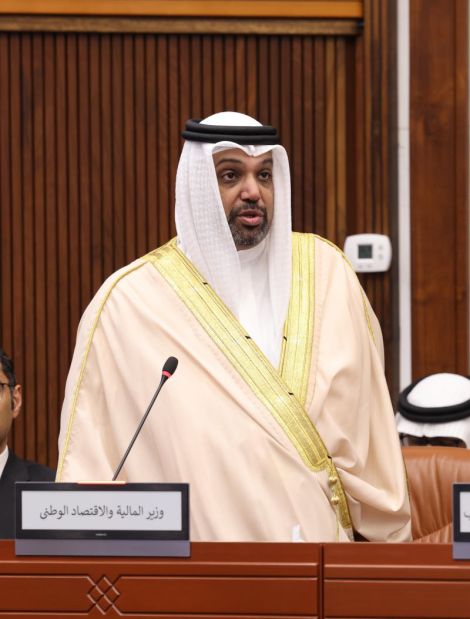
Shaikh Salman
“The government’s proactive approach to revenue diversification and fiscal management underscores its commitment to economic sustainability in the face of global uncertainties,” he said.
“With non-oil revenues projected to surpass oil revenues for the first time in 2026, Bahrain is taking concrete steps towards a future less dependent on hydrocarbons.”
Shura Council Chairman Ali Saleh Al Saleh praised Shaikh Salman’s efforts in getting the budget approved.
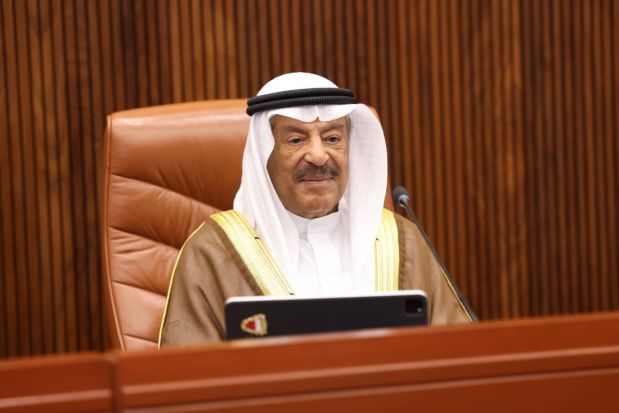
Mr Al Saleh
“This is the best example of co-operation between the Cabinet and the National Assembly; this budget is an Eidiya for the people,” he said.
“Pensioners are set to receive BD40 monthly and there are new health, education, housing and infrastructure projects planned, to ensure people maintain their living standards.
“There are a lot of benefits in the budget and despite the circumstances, we have smoothly managed to continue putting the country in a strong financial position.”
The total spending budget for both this year and the next will be BD8.916 billion, divided into BD4.379bn this year and BD4.536bn the next.
Recurrent expenditure will be BD8.366bn – BD4.104bn this year and BD4.261bn the next.
A total of BD550 million will be spent on projects, divided equally into BD275m each year.
The government is anticipating general revenues of around BD6.383bn – BD2.924bn this year and BD3.459bn the next.
A total of BD37.234m is expected to be transferred to the Future Generations Fund from exported oil barrels – BD18.703m this year and BD18.531m the next.
The deficit calculated for both years is BD2.532bn with BD1.455bn this year and BD1.077bn in 2026. As mentioned in law, the deficit will be covered through borrowing.
Municipal revenues for both years, covering the Capital Trustees Authority and the three other municipalities, is expected to hit BD215m – BD105m this year and BD110m in 2026. Municipal spending would be BD199.593m – BD99.363m this year and BD100.230m the next.
The Finance and National Economy Minister is authorised under the legislation to distribute BD134.469m wherever needed – BD62.292m this year and BD72.177m next year.
Meanwhile, Shura Council members also unanimously approved amendments to the 1977 Bonds Law to raise Bahrain’s borrowing ceiling to BD22.5bn – to finance the budget deficit and meet upcoming financial obligations.
mohammed@gdnmedia.bh
&uuid=(email))