

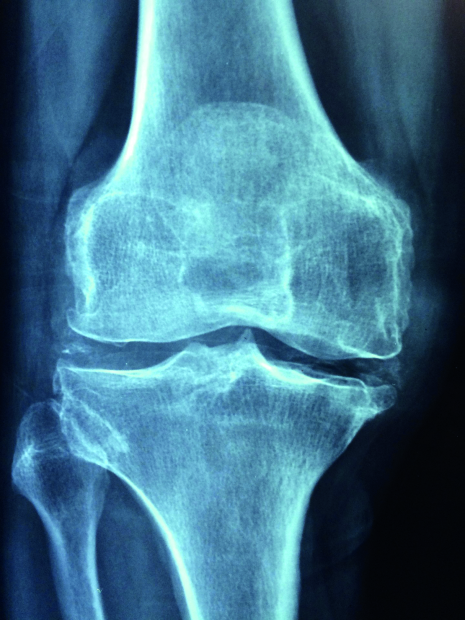
Medical researchers are calling for an osteoporosis-focused national screening programme and more awareness about the debilitating bone disease, according to a recently published study.
The ‘Osteoporosis in Primary Care: An Analysis of Family Physicians’ Knowledge, Attitudes and Practices in Bahrain’ study, published in the peer-reviewed Cureus Journal of Medical Science, was conducted by a group of Health Ministry researchers.
The team included Zahra Alawi, Ebrahim Matar, Wafa Hasan, Isa Althawadi, Aalaa Fakhrawi, Adla Hassan, Mohamed Shehata, Adel Alsayyad, Dalal Al Hashel and Mahmood Al Saeed.
“Our research demonstrated average levels of knowledge on osteoporosis among family physicians in Bahrain, however there is a deficiency in receiving formal updated training,” researchers noted.
“The results highlight several specific deficiencies in both osteoporosis-related knowledge and clinical practice.
“Therefore, we suggest the need for a well-developed national screening and awareness programme to increase screening practices and enhance knowledge about osteoporosis in primary healthcare.”
Osteoporosis is a chronic disease that weakens bones, making them fragile and prone to fractures.
It occurs when bone loses density, calcium and minerals. Often called a ‘silent disease,’ it progresses without symptoms until a fracture occurs, commonly in the hip, spine or wrist.
Risk factors include age, gender, genetics and lifestyle choices like poor diet and inactivity, with postmenopausal women and adults older than 65 being particularly at risk.
While there is a perception that the disease only affects people above the age of 50, early onset osteoporosis can affect people as young as 25.
According to the Cleveland Clinic, experts estimate that half of all women and one in four men over 50 have osteoporosis.
Prevention involves a balanced diet rich in calcium and vitamin D, regular weight-bearing exercise, and avoiding smoking and excessive alcohol.
“Preventing and treating osteoporosis and its complications by proper screening and management will significantly improve prognosis and quality of life,” researchers noted in the study.
“Primary healthcare physicians play an important role in the primary prevention of chronic diseases.
“To that effect, we sought to assess the knowledge, attitude and practices on the subject of osteoporosis among family physicians in Bahrain in order to identify the level of awareness in primary care centres.”
The study was conducted on 210 family physicians, with a range of experience from less than five years to more than 20 years, and operating both within the public and private sectors.
Approximately 65.7 per cent of them reported not having received any osteoporosis training in the last five years.
“When asked about recent osteoporosis training, only 34.3pc of our study participants have received training on osteoporosis management within the last five years,” researchers added.
“This low percentage might be related to poor exposure to osteoporosis in the primary healthcare setting. Other reasons include time constraints, financial barriers and a lack of institutional support.”
Researchers called for a well-established national programme, which includes screening, training and management guidelines, in order to raise awareness and enhance knowledge, so that healthcare professionals can identify osteoporosis cases and initiate treatment.
naman@gdnmedia.bh
&uuid=(email))