

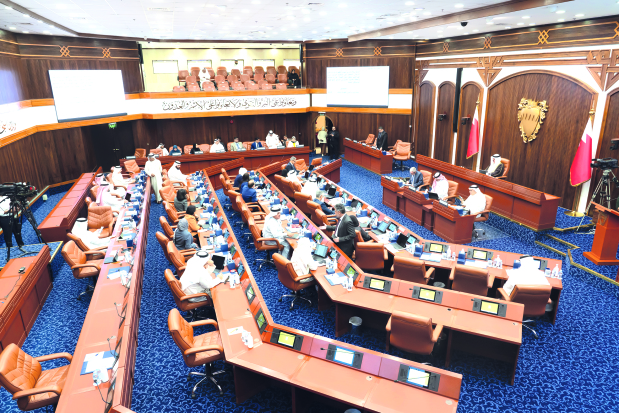
Parliament is set to review a government-drafted legislation that aims to strengthen the private sector’s access to credit and enhance Bahrain’s competitiveness in global business readiness indices.
The draft Law on Secured Transactions, consisting of 60 articles, seeks to particularly empower small and medium enterprises (SMEs) to leverage their movable assets as collateral for affordable financing, without disrupting their use.
“This law is a critical step towards creating a more agile, secure and transparent financial ecosystem in Bahrain,” said Parliament’s financial and economic affairs committee chairman Ahmed Al Salloom.
“It will boost liquidity, support SMEs and position Bahrain as a leading hub for modern financial services.”
The proposed legislation has garnered strong support from government ministries and business associations.
The Justice, Islamic Affairs and Endowments Ministry highlighted its role in improving the performance of Bahrain’s financial sector and attracting investment, stating that “the law allows institutions to leverage their assets as collateral while continuing to use them, a practice in line with advanced economies.”
The Industry and Commerce Ministry emphasised the law’s significance in supporting SMEs and unifying security rights regulations, contributing to a more predictable legal environment.
The Central Bank of Bahrain (CBB) noted its active role in drafting the law, recognising its impact on reducing lending risks and enhancing credit access. CBB officials had earlier said that the law complied with international standards.
“The legislation introduces financing solutions to underserved segments of the market and will play a major role in lowering credit risk associated with lending to SMEs,” Mr Al Salloom noted, referencing the committee’s consultations with CBB and economic stakeholders.
The Bahrain Chamber stressed the need to train judges on the application of the proposed law, if it gets implemented.
It also called for awareness campaigns, issuance of sector-specific guidelines by the CBB and creation of a digital platform to respond to stakeholder queries.
The Bahrain Businessmen’s Association and Bahrain Businesswomen’s Society praised the law’s role in enhancing financing mechanisms, particularly for SMEs lacking real estate assets.
The Bahrain SME Development Society, which is also chaired by Mr Al Salloom, said the law would serve as a ‘cornerstone for expanding Bahrain’s legal and economic infrastructure’.
“This legislation is about more than just finance. It’s about building a legal foundation for sustainable economic growth, increasing trust in commercial lending and enabling SMEs to thrive,” Mr Al Salloom added.
“Once passed, the law will function as a specialised statute alongside existing commercial and civil codes. It introduces clear definitions and robust enforcement mechanisms for secured transactions, aligning Bahrain with global best practices.
“By standardising the treatment of security rights across all types of movable assets, this law removes uncertainty and unlocks new avenues for economic participation.”
Meanwhile, MPs are set to review a mutual investment agreement with the Korean Republic and a mutual taxation agreement with Oman.
Amendments to the 2012 Private Sector Employment Law that would require employers to present financial status documents before dismissing workers are also set to be debated and voted on.
Parliament’s services committee, chaired by MP Jalila Al Sayed, has recommended the proposal be given the go-ahead despite Acting Labour Minister and Legal Affairs Minister Yousif Khalaf asserting that the practice was already being implemented.
Also set for a vote is an amendment to the 2006 Labour Market Regulatory Law that would grant employers a 30-day grace period after the expiration of an expat employee’s work permit.
&uuid=(email))