

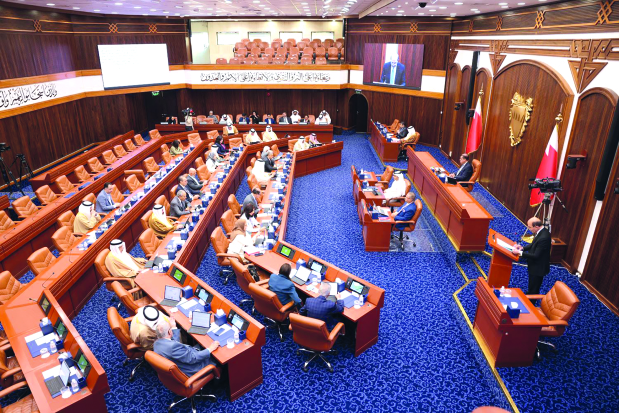
The Shura Council is set to debate a legislative proposal aimed at giving priority to qualified Bahraini nationals for educational, training and administrative positions in private schools and training centres.
The amendment to the 1998 Private Educational and Training Institutions Law, originally proposed by Parliament, was approved by MPs last month.
The Shura Council’s services committee has since recommended its endorsement, citing broad agreement from key government agencies and educational institutions.

Dr Juma
Education Minister Dr Mohammed Mubarak Juma pointed out the proposal’s goals are largely being implemented. However, he highlighted the structural difference between recruitment in public and private schools.
“In public schools, recruitment is conducted directly by the ministry,” he said.
“In private schools, hiring is carried out by the institutions themselves, with the ministry overseeing that legal qualifications and requirements are met.”
He stressed ongoing efforts to encourage private schools to hire Bahraini talent, including providing them with databases of qualified local candidates.
“We supply private schools with CVs of qualified Bahrainis to fill positions, and the Bahraini workforce is highly trusted by educational institutions,” said the minister.
He also revealed plans to present new legislation to further regulate licensing and employment procedures for academic and administrative staff in private schools.

Mr Khalaf
Legal Affairs Minister and Acting Labour Minister Yousif Khalaf also pointed out that the objectives of the proposal are already being realised.
“The percentage of Bahraini trainers in private training centres reached 93.12 per cent last year,” he said, citing figures that showed year-on-year increases from 50.61pc in 2020 to more than 80pc by 2023.
He also underlined ongoing initiatives to boost national employment in co-ordination with the Education Ministry and supported by Tamkeen, Bahrain’s labour fund.
“There is clear commitment from the government to prioritising the employment of Bahrainis,” he noted.
“Between 2,500 and 3,000 Bahrainis are hired annually.”

Ms Mofeez
Tamkeen’s chief executive Maha Mofeez also argued that the proposal’s objectives are already being met through the fund’s existing programmes.
“Our mandate under law is to enhance national workforce competitiveness and ensure Bahrainis are the top choice for employers,” she said.
“We have launched various training and qualification programmes targeting Bahrainis and private sector institutions to enhance skills and employment readiness.”
Naseem International School expressed full support for the national direction of prioritising Bahrainis, but felt that existing legislation already fulfils the proposal’s intent.
“The current legal framework sufficiently ensures priority for Bahraini hiring, and thus no amendment is necessary,” it stated.
Bahrain Bayan School stressed alignment with Education Ministry policies and strategic focus on national employment.
“Our strategy is deeply rooted in recruiting and empowering Bahrainis,” the school noted.
“Currently, 54pc of our administrative and assistant teaching staff are Bahraini, particularly in leadership roles such as HR, finance, PR, registration and quality assurance.”
The British School of Bahrain offered a more nuanced stance, highlighting its policy of hiring the best candidate regardless of nationality to ensure academic excellence.
“We focus on merit-based hiring to maintain high academic standards,” the school said.
However, it also recommended including a clause that gives Bahrainis priority when two candidates are equally qualified.
“This would help balance the need for quality and the goal of empowering local talent,” the school added.
Shura Council’s services committee, led by Dr Jameela Al Salman, confirmed its recommendation to approve the legislation after a thorough review of stakeholder feedback.
“This legislation reinforces national employment goals and reflects a broader commitment to sustainable human capital development,” she said.
“The committee sees this not as a constraint but as an incentive for schools to invest in and nurture local talent.
“The legislation now moves forward for final approval by the full Shura Council, potentially cementing a significant step toward deepening Bahrainisation efforts in the private education sector.”
mohammed@gdnmedia.bh
&uuid=(email))