

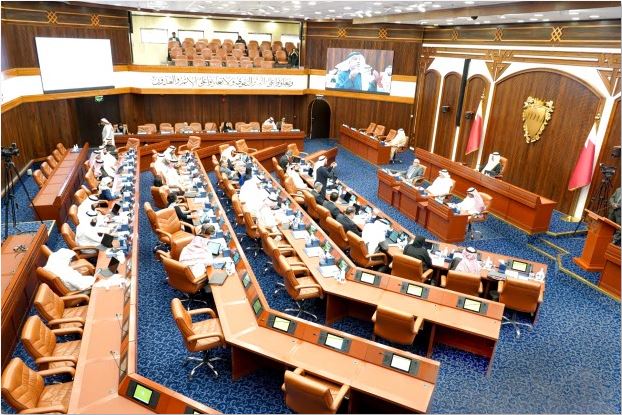
THE modified 2002 Press, Publishing and Printing Law was approved yesterday after being stalled for 12 years.
It followed a heated debate that saw assurances from Information Affairs Minister Dr Ramzan Al Nuaimi on licensing for professional digital platforms and heated remarks from legislators on media freedom.
The legislation was passed with 17 MPs in favour and nine against it during an extraordinary session yesterday.
Dr Al Nuaimi stressed that the law is designed to regulate professional media institutions only, and not personal social media accounts.
He pledged that all professional digital media pages and platforms would be formally registered and licensed under the new law.
“The law will not interfere with personal social media pages. It is strictly about organising professional and commercial media activities. Anyone running a media or advertising platform will be granted an official legal status and licence under the new law,” said Dr Al Nuaimi.
The minister highlighted that the draft was shaped after extensive consultations with stakeholders across the media sector, including digital content creators, newspaper managers, political associations and civil society groups.
An article which required electronic publishers to possess full political rights was deleted entirely following concerns from digital media stakeholders.
“I clearly and explicitly pledge to license all electronic pages that engage in media or advertising activities. Many of these are already regulated under existing advertising laws. There is no fear for those who operate professionally – they will be protected and recognised by this law,” said Dr Al Nuaimi.
Despite passing most provisions, Parliament rejected Article 90 (bis), which would have given the Information Affairs Ministry broad powers to license media and advertising activities not explicitly covered under existing laws.
MPs rejected the article and its associated clauses, citing fears of government overreach into new and evolving media spaces.
MP Jalal Kadhem Al Mahfoodh fiercely criticised social media influencers, calling them ‘moths leeching off established media institutions and trained journalists’.
Jalila Al Sayed, chairwoman of Parliament’s services committee, defended the legislation.
“This law is forward-looking and provides the structure necessary to support the future of media in Bahrain,” she said.
Justice, Islamic Affairs and Endowments Minister Nawaf Al Maawda emphasised that the law should remain adaptable to new technologies such as artificial intelligence and the metaverse – a clause that has been removed by MPs.
“We must future-proof the law to accommodate emerging innovations. The media sector is evolving rapidly, and our legal frameworks must keep up,” he said.
The law will regulate print journalism, electronic media, publications, cinema and other media sectors. It replaces the 23-year-old legal framework and aims to modernise Bahrain’s media environment.
With parliamentary approval secured by a divided vote, the draft has now been urgently forwarded to the Shura Council for further review and ratification.
Editors-in-chief, Bahrain Journalists’ Association members, journalists and media personnel were present at the session.
&uuid=(email))