

Bahrain is set to strengthen its legal framework to tackle the misuse of national standards and technical regulations, with offenders facing prison terms of up to three years and/or fines ranging from BD100 to BD10,000.
The new legislative amendment to the 2016 Standards and Metrology Law will be debated during the Shura Council’s final session of the legislative term tomorrow. It was approved by MPs last month.
The proposed legislation expands the scope of violations to include a broader range of prohibited actions. This includes unauthorised circulation, sale, or display of national standards or technical regulations, and the use of symbols, shapes, or phrases suggesting that documents are officially sanctioned.
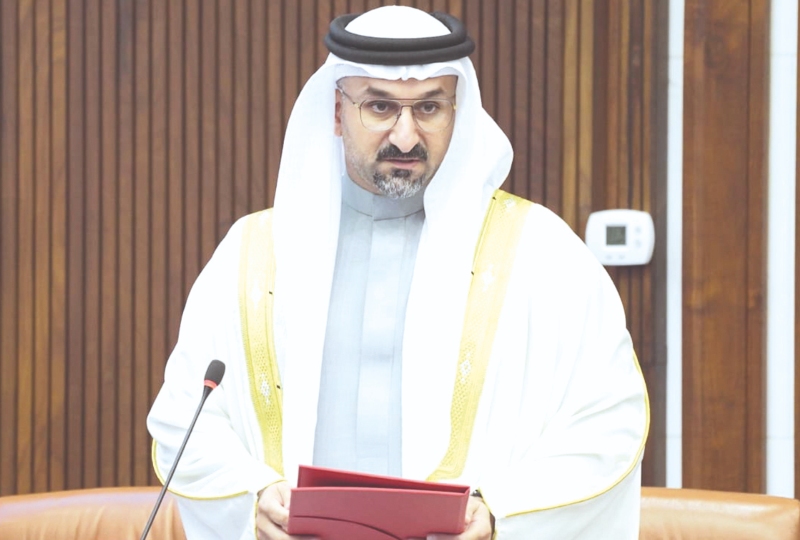
Industry and Commerce Minister Abdulla bin Adel Fakhro explained the significance of the legislative update.
“This amendment explicitly adds ‘technical regulations’ alongside ‘national standards’ in the law, closing a critical legal loophole that left some official documents unprotected. All technical documents – whether mandatory or advisory – must be safeguarded,” he said.
“Also, by capturing activities such as online sharing or redistribution via social media, this law equips regulators to take action in today’s digital environment, where unauthorised content can spread quickly and easily.”
The move aims to address growing concerns over the illegal reproduction or misuse of documents that guide safety standards for products, industrial processes, and services – many of which are created in collaboration with the GCC Standardisation Organisation.
“These regulations are the product of co-ordinated regional efforts and are distributed through official platforms such as the Bahrain Standards Store,” Mr Fakhro said.
“Unauthorised circulation not only violates copyright, but also undermines the credibility of Bahrain’s national standards system and potentially compromises public safety.”
He also stressed the importance of modern enforcement mechanisms, particularly at a time when digital piracy and the spread of counterfeit documents are on the rise.
“The law must evolve to reflect current realities and provide robust tools to deter violations. This is essential to ensure legal integrity, uphold safety, and support Bahrain’s reputation as a rules-based economy.”
Shura Council financial and economic affairs committee chairman Khalid Al Maskati backed the amendments, describing them as a necessary update to an outdated legal framework.
“These changes are not only about legal enforcement, they are about protecting the public, defending intellectual property, and preserving Bahrain’s credibility in the global regulatory and industrial landscape,” he said.
Mr Al Maskati added that regulating the misuse of symbols and phrases that mimic official markings would prevent fraudulent practices that have become increasingly sophisticated.
The proposed law also restructures the National Committee for Standards and Metrology to make it more responsive to rapid technological and industrial developments.
Under the new provisions, the committee – currently chaired by the minister and limited to a fixed number of representatives – will adopt a more flexible membership model, allowing inclusion of various ministries, regulators, and private sector representatives, including from the Bahrain Chamber.
“Broadening the committee’s structure ensures that national standards are developed with input from all key stakeholders. It allows for real-time responsiveness to market changes and industry needs,” said Mr Al Maskati.
The Bahrain Chamber has also welcomed the amendments, highlighting the importance of private sector engagement in shaping standards and metrology policy.
If approved by the Shura Council tomorrow, the amended law will be forwarded to His Majesty King Hamad for ratification.
&uuid=(email))