

The thorny issue of allowing the children born to Bahraini women – who are married to expatriates – gain the same nationality status as their mothers will once again come under the spotlight.
Parliament’s foreign affairs, defence and national security committee chairman MP Hassan Bukhammas revealed that ‘serious consideration’ will be given to moves on reforming the 1965 Foreigners (Migration and Residency) Law during the National Assembly’s summer recess.
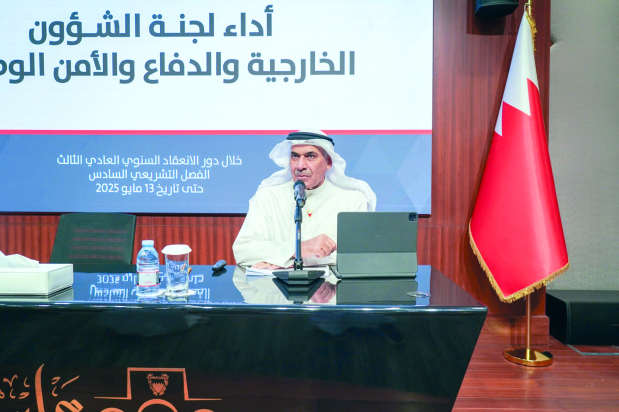
Speaking at a Press conference held at the assembly’s complex in Gudaibiya, Mr Bukhammas revealed that his committee would engage in in-depth discussions with the Interior Ministry to explore potential amendments that could allow children caught up in a passport battle to achieve Bahraini status – under specific conditions’.
“We back the call for those children to live here as nationals,” said Mr Bukhammas. “Most of them don’t know anything or have any extended family connections to their father’s homeland. It is unfair for them to continue being treated as strangers in Bahrain.”
Although Bahrain provides essential public services like healthcare and education, Mr Bukhammas emphasised that a lack of citizenship remains a painful and defining gap in their status.
“The state already provides them with free medical and educational services as Bahrainis,” he noted. “But the main issue is not that – it is the nationality.”
The proposed changes would not offer automatic citizenship but would, instead, establish eligibility under agreed-upon terms. “The specific conditions” have still to be outlined.
These may include factors such as a minimum period of residency in Bahrain, as well as renunciation of the father’s nationality, and other criteria to be discussed.
“We want to reach a balanced solution that respects national interests while ending the suffering of thousands who were born, raised and educated here – but still lack the rights and identity of a Bahraini citizen,” Mr Bukhammas added.
The issue of nationality transmission through mothers has been a topic of growing concern in Bahrain.
Advocacy groups and MPs have repeatedly called for legislative reform to address the legal limbo faced by children who are born to expatriate men and live their entire lives in Bahrain, but are denied citizenship simply because their fathers are regarded as foreigners.
With Parliament’s summer recess stretching over five months, Mr Bukhammas said the extended period would be used to hold detailed consultations with government stakeholders to lay the groundwork for future legislative amendments.
“We believe the time has come for a serious review of the law, especially considering the human, social and national dimensions of this issue,” he stated.
No specific timeline has yet been set for presenting the amendments to Parliament, but Mr Bukhammas indicated that any proposals arising from the recess consultations could be ready for debate in the next legislative session.
“The push for reform could mark a significant shift in Bahrain’s approach to nationality law and could potentially bring relief to thousands of families who have long called Bahrain home,” he stressed.
Currently, only children with Bahraini fathers are considered legitimate Bahrainis, even if their mothers were born in a different country.
The GDN had highlighted the issue through a campaign #MakeADifference in October 2017, seeking a change in the law, which would allow Bahraini women to pass on their nationality to their children, irrespective of their husband’s nationality. It invited people to sign a petition calling for the National Assembly to approve the amendment.
The campaign was backed by more than 5,000 people and various groups including Bahrain Human Rights Watch Society, Bahrain Women’s Union and the Bahrain Young Ladies Association.
The petition on change.org gathered over more than 13,000 signatures.
&uuid=(email))