

Fishermen in Bahrain are urging authorities to adopt a more scientific and flexible approach towards shrimping, claiming that the annual ban is hurting their livelihoods.
They said that the kingdom should look at models from other GCC countries, including Saudi Arabia, and conduct studies and assessment of stocks before initiating a clamp.
A six-month shrimping ban is currently in place until July 31 and several fishermen have criticised the move, especially in the past few months, asking officials to come up with alternative solutions.
Fisherman Redha Alweneh is among those vying for a change and highlighted Saudi’s successful experience in organising the fishing season.

Mr Alweneh
“In Saudi, there is ongoing collaboration with universities and research institutions to conduct studies aimed at developing the shrimping season and reassessing its start date based on environmental and climatic factors,” Mr Alweneh told the GDN.
“Authorities document catch volumes meticulously to ensure transparency and sustainability.
“Marketing and cultural aspects are not overlooked either, with annual festivals celebrating the shrimp season, boosting local market presence and encouraging consumption.”
He claimed that Bahraini fishermen, however, faced ‘a painful paradox’.
“Although the Fisheries Protection and Development Directorate announces the shrimp season each year, no licences are issued due to a 2018 decision banning the use of bottom trawl nets – the only effective method for commercial shrimp fishing,” he said.
“This decision, made under the banner of environmental protection, was not accompanied by any practical alternatives for fishermen or a clear plan for stock rehabilitation using scientifically studied methods.
“The consequences have been dire; hundreds of fishermen have lost their livelihoods and the market has been flooded with illegally caught shrimp sold with little to no effective oversight.”

Shrimp remains off the menu until the end of the month
Mr Alweneh explained that Saudi and Kuwait share nearly identical marine environments as Bahrain and designate a unified shrimping season using the same bottom trawling method, but do so in a regulated and scientifically monitored manner.
He suggested that Bahrain should optimise the season’s start to balance stock levels and fishermen’s needs, rather than dismiss repeated calls from the community and enforce a blanket ban.
Mr Alweneh also alleged that his licence renewal is denied every year due to the trawl ban, and the decision has caused severe economic and social crises for families, stripping them of their sole source of income without compensation or alternatives.
He and several other Bahraini fishermen are now calling for a licensed shrimping fleet, the renewal of their licences, and a reassessment of a policy that he alleges has brought the entire sector to a standstill.
“Why can’t we implement the same successful model practised by our neighbours?” he asked.
“Sustainability does not mean exclusion or total prohibition, it lies in balancing environmental protection with ensuring a dignified livelihood for those working in the fishing sector.
“Saudi Arabia’s experience can serve as a model for Bahrain and the country should adopt it, rather than continue with a policy of prohibition and marginalisation.
“It is time for Bahraini authorities to reconsider the ban and listen to the fishermen who deserve a seat at the table. It is illogical to announce a fishing season without allowing anyone to fish while violators operate freely.”

Four men arrested on suspicion of illegal shrimping in March this year
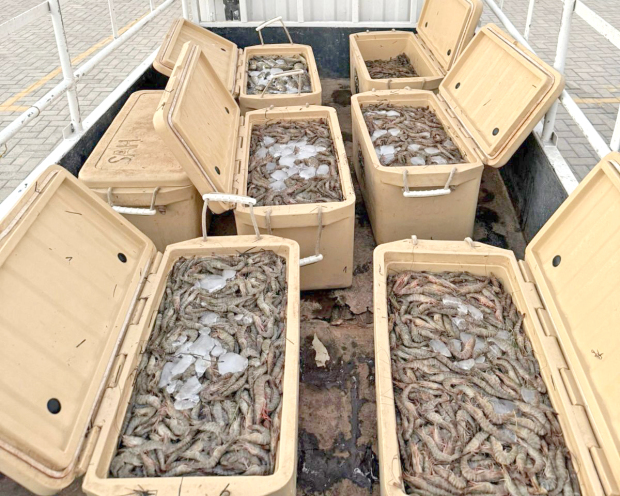
Since the start of the ban, multiple fishermen have been arrested by Coastguard officials for violating the clamp. Recently, a 26-year-old was held in Hamala and about 210kg of illegally caught shrimp was seized from him.
Majority of the violations registered in the past few months were related to using banned trawling nets.
In 2018, a trawling ban was introduced after it emerged that the country’s fish stocks had dropped by 90 per cent since 2004.
Trawling has one of the highest bycatch rates of all fishing techniques and often damages the sea floor, with nets dragged along the sea bottom, scooping up everything in their path. Species caught include turtles and juvenile fish.
nader@gdnmedia.bh
&uuid=(email))