

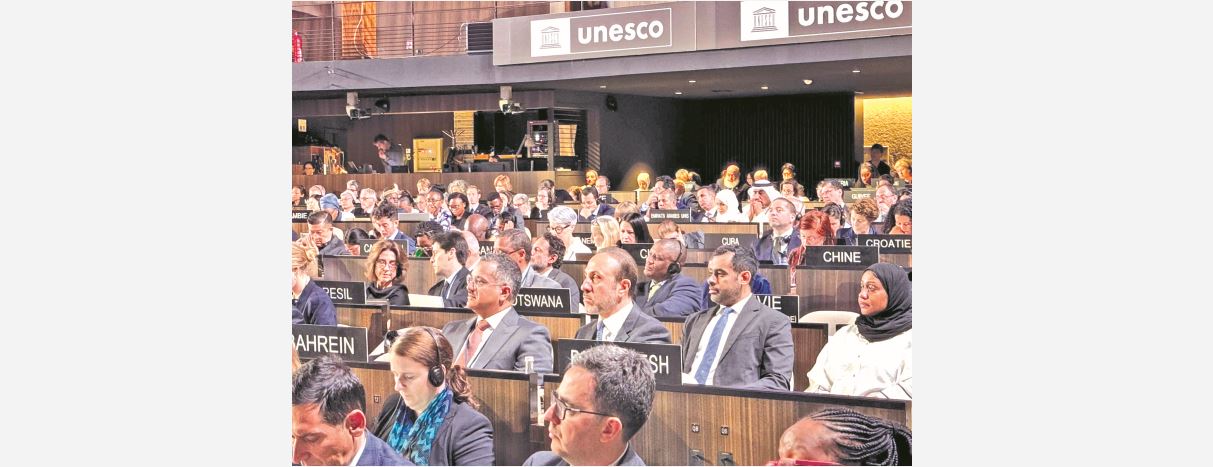
Bahrain is taking part in a key meeting that is considering the inscription of 32 new sites on the World Heritage List.
The Unesco, the United Nation’s cultural organisation, will announce its choice of sites for inclusion, with pre-historic caves, former centres of repression, forests, marine bio-systems and others vying for the coveted spots.
Bahrain Authority for Culture and Antiquities (Baca) president Shaikh Khalifa bin Ahmed Al Khalifa is taking part in the 47th session of the World Heritage Committee being held in Paris, France.
Shaikh Khalifa emphasised that Bahrain remains firmly committed to protecting cultural and human heritage, and to playing an active role in international efforts to safeguard and document it.
He added that this year’s meeting of the World Heritage Committee provides an important opportunity to exchange expertise and review achievements in the field.
The Baca president expressed Bahrain’s pride in being part of this global movement, which unites countries, institutions and partners under one umbrella to protect humanity’s shared heritage.
The World Heritage Committee is a key mechanism for implementing the 1972 World Heritage Convention. The committee meets annually to consider the nomination files of sites submitted by states for inscription on the World Heritage List, and to monitor the state of conservation, protection and management of sites already inscribed in various countries.
The current heritage list contains 1,223 cultural, natural or mixed sites. Of the organisation’s 196 member states, 27 are absent from the list, including several African nations.
Two of them – Guinea-Bissau and Sierra Leone – hope this will change this year, as they pitch the Bijagos islands and Gola-Tiwai wildlife reserves, respectively, to Unesco.
The Unesco has been seeking to boost Africa’s presence on the heritage list, officials say.
Among the candidates from elsewhere, a number of competing sites go back to pre-historic times, such as the Carnac stones in western France and rock carvings along the Bangucheon Stream in South Korea.
&uuid=(email))