

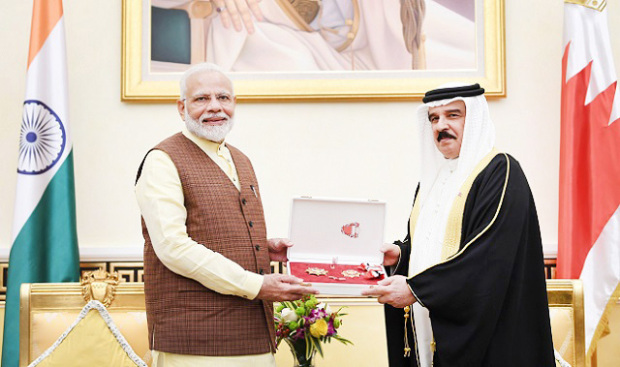
India is celebrating its 79th Independence Day today, marking years of progress since it gained independence from the British in 1947.
As it moves into the future, its deep cultural, strategic and economic ties with Bahrain are key to progress for the two countries, with bilateral trade approaching $2 billion.
India is among Bahrain’s top five trading partners. Bilateral trade stood at $1.64bn in 2024–25, slightly lower than $1.74bn in the previous year.
Bahrain’s main imports from India included engineering and electronic goods, petroleum products, gems and jewellery, and agricultural products.
Exports to India were dominated by petroleum products and aluminium.
From early 2023 to early 2024, Indian investments in Bahrain grew by 15 per cent to reach a total of $1.56bn, with financial services, real estate, hospitality, IT, and education as key sectors.
Bahraini investments in India, totalling $185 million, have focused on real estate, IT, and engineering, with portfolio investments by firms such as Investcorp reaching around $1bn.
Ancient Bahraini traders are believed to have carried out a flourishing trade of pearls with spices from India and today, the two countries work together in a variety of sectors, reinforced by robust political, economic and people-to-people connections.
The presence of around 332,000 Indians in Bahrain, nearly a quarter of its population, remains a cornerstone of bilateral engagement. The past year saw significant high-level interactions between the two countries.
India’s External Affairs Minister Dr S Jaishankar visited Bahrain in December last year to co-chair the fourth High Joint Commission meeting and participate in the IISS Manama Dialogue. This meeting advanced co-operation in trade, labour, and healthcare, and reviewed progress on consular matters, including the establishment of a Joint Consular Committee.
Both sides reaffirmed commitment to strategic co-operation, with prior engagements between Dr S Jaishankar and Bahraini Foreign Minister Dr Abdullatif bin Rashid Al Zayani at the Non Aligned Movement Summit (January 2024) and the India-GCC Strategic Dialogue (September 2024).
In May this year, an Indian parliamentary delegation visited Bahrain to discuss regional security following a terror attack in India, meeting senior Bahraini leaders and think tanks. Soon after, India’s Minister of State for Law and Justice and Parliamentary Affairs Arjun Ram Meghwal held talks with top Bahraini officials and legal institutions.
In addition, the Second Joint Working Group on Healthcare was held virtually in January this year, focusing on collaborative medical initiatives.
Defence co-operation continued through India’s liaison role with the US Fifth Fleet in Bahrain and engagement within the Combined Maritime Forces.
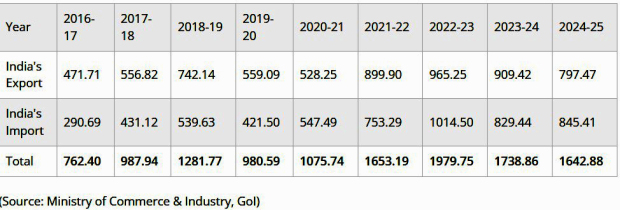
A breakdown of India- Bahrain bilateral trade relations
A memorandum of understanding signed in August 2024 between India’s Comptroller and Auditor General and Bahrain’s National Audit Office also strengthened institutional collaboration.
Bahrain’s ongoing recognition of Indian heritage has been reflected in the continued prominence of the ‘Little India in Bahrain’ project and the Hindu Krishna Temple in Manama. The BAPS Swaminarayan Temple project, approved earlier, remains a symbol of cultural inclusivity.
Cultural diplomacy has also deepened over the past year. In August last year, India showcased its state Odisha’s tourism and products at Bahrain’s Youth City ‘International Week’, alongside performances by the Odia community. Bahraini youth engagement with India continued through participation in the Y-20 Summit in 2023 and growing interest in internships with Indian companies.
Bahrain’s participation in the Voice of Global South Summit in 2024 and its membership in the International Solar Alliance reflected converging interests in global governance and sustainable energy.
Co-operation also extended into auditing, renewable energy, healthcare and customs facilitation, with the 2023 Joint Action Plan on mutual recognition of Authorised Economic Operators taking effect.
India-Bahrain relations in 2024 and 2025 have been characterised by deepening institutional linkages, sustained political dialogue and tangible outcomes in trade, investment and community welfare.
The combination of historic goodwill, economic co-operation and shared regional interests positions the partnership for continued growth across diplomatic, business, cultural, and strategic domains.
&uuid=(email))