

A new report that highlights Bahrain’s commitment towards the United Nations 2030 agenda for Sustainable Development Goals (SDGs) was released yesterday.
It emphasises the collective achievements of the UN Country Team (UNCT), comprising 21 entities working across key development areas, as well as the challenges facing Bahrain.
The 2024 Annual Report details that UNCT received more than $3.6 million to fund programmes, campaigns and initiatives to achieve SDGs in the kingdom – which includes more than $1.3m given by the Bahrain government, $200,000 by the private sector, and the rest by other entities, including the governments of the UAE and the UK.
The focus was on key development areas and support for climate resilience, sustainable and healthy cities, and an inclusive green transition.

The four main outcomes and the expenditure for their activities, programmes and projects
The top three goals for which funds were used were – Good Health and Well Being (SDG-3), Decent Jobs and Economic Growth (SDG- 8) and Gender Equality ( SDG-5).
“Through strategic partnerships with the government of Bahrain, civil society and the private sector, the UNCT has delivered results that reflect the country’s commitment to sustainable and inclusive development,” said UN resident co-ordinator in Bahrain Khaled El Mekwad.
“This report is more than a reflection of our joint work with Bahrain – it’s a testament to what can be achieved when we unite around shared goals, and it demonstrates how the UN system continues to support Bahrain’s Vision 2030 and its national development priorities.”

A breakdown of the source of funding by different stakeholders
The official stated in the report that their ongoing goal with the Bahrain-UN partnership is to support government efforts to achieve sustainable development.
He said their partnership is guided by the Strategic and Sustainable Development Co-operation Framework (2021-2024), which outlines common priorities and desired outcomes.

Solar panels were installed on the rooftop of the UN House in Manama.
“During the year (2024), the United Nations collected and analysed data, built the skills and capacities of government entities, and educated and engaged the public,” said Mr El Mekwad in the foreword.
“Together, we devised a new Co-operation Framework 2025-2029 that will guide our partnership through the end of the 2030 Agenda for Sustainable Development and Bahrain’s Economic Vision 2030.
“The work ahead will not be easy. Bahrain and the world face increasing challenges over climate, energy, water, food, migration, inequality, artificial intelligence and more.
“But I am confident in the joint commitment of the United Nations, the Government of Bahrain, our national stakeholders, and development partners to adapt and respond.”
The report outlines work by the Bahrain government and the UN, along with other partners, in four main outcome areas:
1. Environment, energy, and food: The document states that $630,000 was spent on several projects, including installing a 52kw solar panel on the rooftop of UN headquarters in Manama, launching the Buthoor Al Bahrain’s afforestation campaign, distributing 13,000 seedlings in the first three months of last year, training government officials on urban forestry, health, and climate change, and organising workshops and meetings.
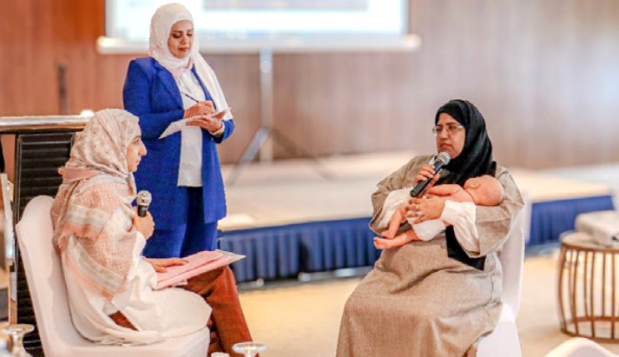
2. Quality, Comprehensive Social Services: More than $1m was allocated to UNCT that was used for various projects – including supporting the designation of two governorates (Capital and Northern) in Bahrain as healthy governorates, training public health professionals and holding workshops on breastfeeding and maternity care, and helping Shamsaha mobile app team to connect and support women and girls who survived violence.
In addition, a country profile on the Rights and Wellbeing of Older Persons in Bahrain was produced last year, and technical guidance provided to the government on a flagship health survey, among other projects.
3. Economic Diversification, Public Administration, and Resilience: Over $1.3m was spent on a range of activities.
a. Enabling private sector companies in Bahrain to have access to tools and knowledge networks to support gender equality in the workplace, community, and marketplace
b. Identifying skills gaps and mismatches in the labour market to accelerate women’s participation in the private sector
c. Bolstering the skills of entrepreneurs in 122 startups and providing business counselling to another 250 enterprises— resulting in investments totalling an estimated $18m and the creation of more than 800 jobs.
4. Bahrain Among Nations: The report states that more than $550,000 was spent on different activities and programmes, such as hosting the 10th edition of the Youth Leadership Programme; seminar on ‘Human Rights in the Bahraini Criminal Justice System’ for 60 participants; helping to send Bahraini representatives to international meetings and conferences on topics such as decent work for young people, desertification, and drug control; and engaging with government officials in a workshop and other activities on disaster risk reduction.

The cover of the 2024 UN report
The 23-page document released yesterday highlights that Bahrain last year made great progress on its ambitious goals in its Economic Vision 2030 ‘as it started preparing for the country’s 2050 Vision’.
“There was also robust performance in sectors such as information and communication, business activities, financial services and public administration,” according to the report.
“In the area of social development, Bahrain took steps for the rights of detainees by releasing more than 1,500 prisoners in a mass amnesty.”
The document highlights that climate action remained a priority for Bahrain, citing its plans to achieve net zero emissions by 2060.
sandy@gdnmedia.bh
&uuid=(email))