

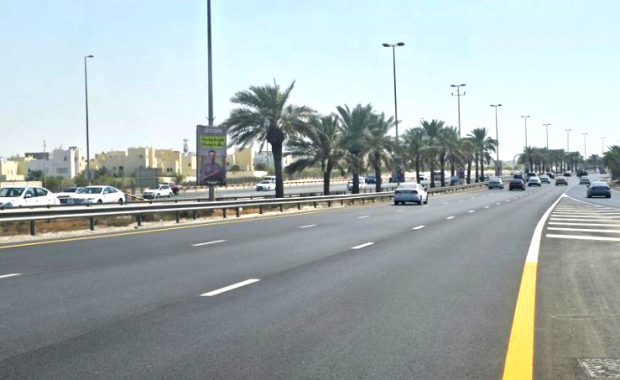
Municipal leaders across Bahrain are urging authorities to review and raise road speed limits before pressing ahead with the installation of new cameras and radars.
They argue that modern vehicles and improved road engineering can handle higher speeds, and that clinging to decades-old restrictions would only fuel frustration among drivers.
Muharraq Municipal Council chairman Abdulaziz Al Naar stressed that many of the existing limits were outdated and introduced under vastly different conditions.

Mr Al Naar
“They were set decades ago and may not have kept pace with advancements in car safety, road design and traffic flow patterns,” he pointed out.
“Cars are now equipped with advanced safety technologies such as anti-lock brakes, stability control and automatic emergency braking, which allow them to be safely driven at higher speeds.”
Mr Al Naar highlighted the advancements in Bahrain’s infrastructure, with better road engineering, clearer signage, and more sophisticated traffic management systems in place today.
He warned that low speed limits on major roads, such as the Shaikh Hamad Bridge (Manama–Muharraq) and the Shaikh Salman Highway (Khamis–Riffa Clock Tower), were only causing frustration among drivers.
“This frustration can lead to dangerous behaviours like tailgating or sudden lane changes, paradoxically increasing the risk of accidents instead of preventing them,” he said.
He claimed that when limits are perceived as unrealistic, many motorists simply ignored them.
“Widespread non-compliance erodes respect for traffic laws, in general. The installation of cameras in such areas may end up feeling punitive rather than protective.
“Drivers will respect speed cameras only when the limits they enforce make sense,” Mr Al Naar added.
Southern Municipal Council chairman Abdulla Abdullatif echoed the call for reform, noting that several major highways could comfortably support higher speeds.

Mr Abdullatif
“This would ensure that limits reflect actual driving conditions, the capabilities of modern vehicles and the realities of traffic flow,” he said.
“For example, roads with multiple lanes, wide shoulders and advanced drainage systems can safely support speeds of 120 kilometres per hour, but many are still capped at 80kmph.”
He pointed out that research shows most drivers travel at speeds they consider safe, regardless of posted limits.
“If the majority of drivers are travelling faster than 80kmph on a highway, those adhering to the lower speed limit can disrupt traffic flow, increasing the likelihood of accidents,” Mr Abdullatif explained.
While speed cameras and radars are effective enforcement tools, their credibility depends on the fairness of the limits themselves, he argued.
“Where roads are found to support higher speeds safely, limits should be adjusted before cameras or radars are installed. Otherwise, enforcement risks being viewed by the public as a revenue-generating exercise rather than a safety measure.”
He also suggested the use of variable speed limits, which can be adjusted in real-time depending on traffic, weather and road conditions.
Capital Trustees Board chairman Saleh Tarradah called for annual reviews of speed limits by the Traffic Council to keep pace with changes in road use and design.
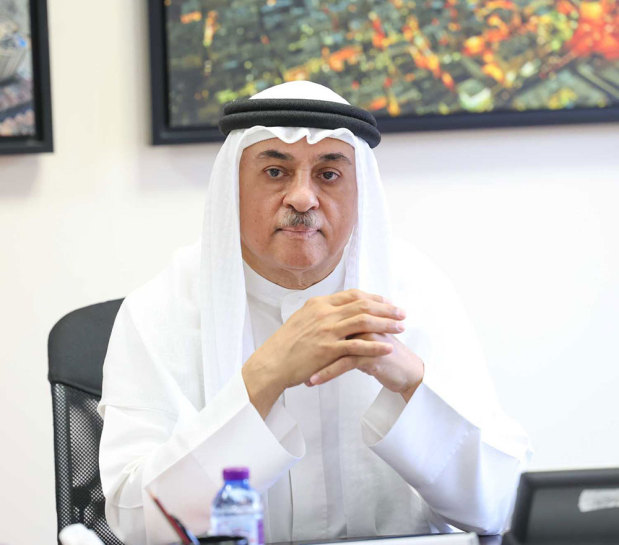
Mr Tarradah
“The nature of the road changes, and so should the speeds,” he said.
“For example, having 80kmph as the limit on Shaikh Salman Highway near the Educational Area is unrealistic, most drive at 100kmph because it is essentially a free-flowing road.”
He suggested using artificial intelligence technology to analyse actual driving speeds and set limits accordingly.
“AI could help determine how many people drive at 100, 80 or 60kmph on a given road – and either speed limits can be redrawn or roads adjusted to accommodate that speed,” he said.
Mr Tarradah also flagged inconsistencies, citing the Janabiya Highway turnover bridge leading to Shaikh Isa Bin Salman Highway, where ‘the speed drops suddenly to 50kmph before jumping to 120kmph’. “That simply doesn’t make sense and clearly needs to be corrected,” he said.
Internationally, experts remain divided.
Road safety campaigners often argue for stricter enforcement, with some studies showing that lowering limits can significantly reduce fatalities. In Belgium’s Flanders region, for example, cutting limits to 70kmph on certain highways reduced overall crashes by five per cent and serious or fatal accidents by 33pc.
In Bahrain, the limit on some stretches of major highways has already been raised to 120kmph, but no official data has been published on whether this has led to more or fewer accidents.
For now, municipal leaders are urging a balance between safety and practicality, warning that without a comprehensive review, new enforcement measures could backfire.
The debate follows amendments to the 2014 Traffic Law issued by His Majesty King Hamad, which stipulate tougher punishments for traffic violations.
mohammed@gdnmedia.bh
&uuid=(email))