

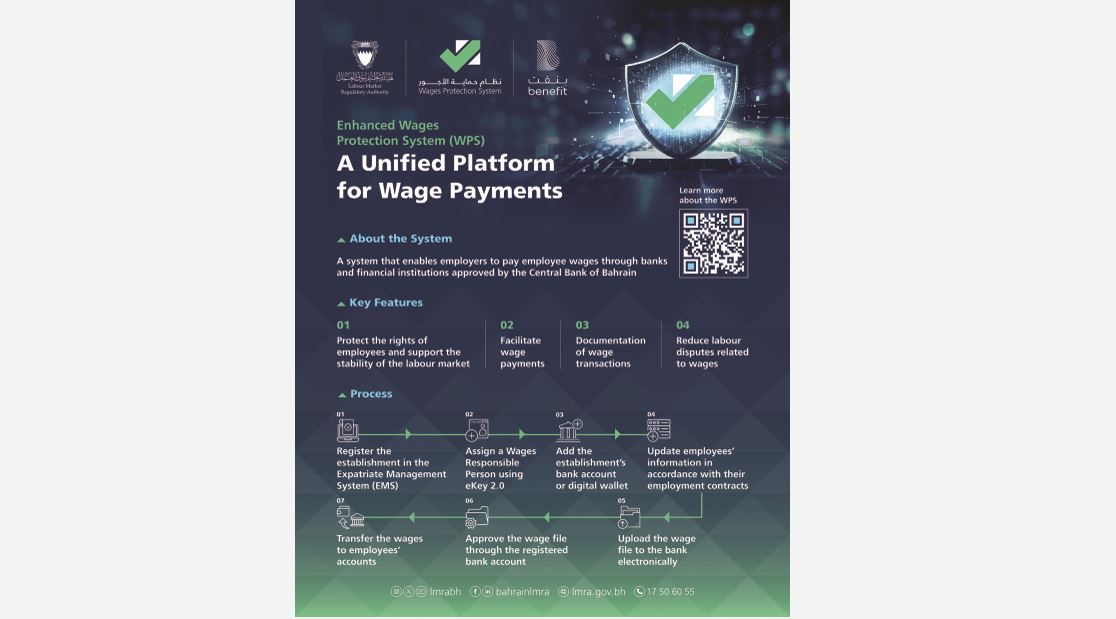
AN advanced Wages Protection System (WPS) that protects the rights of employers and employees will have a positive impact on reinforcing the kingdom’s position as a stable and attractive destination for business and investment, according to a leading agency executive.
The Labour Market Regulatory Authority (LMRA) chief executive and National Committee for Combating Trafficking in Persons chairman Nibras Talib said it will also play a vital role in supporting small and micro establishments by helping to minimise wage-related disputes and expedite their resolution.
He encouraged employers to utilise the system for electronic wage payments to their staff.
The trial procedures to align the advanced system with several banks have been completed, while remaining institutions are being integrated ahead of the full-scale implementation in the first quarter of 2026.
In addition, LMRA has announced monthly training workshops in Arabic and English targeting employers and human resources personnel in the private sector.
Workshop details and schedules are available at-lmra.gov.bh.
Meanwhile, Benefit chief executive Abdulwahed AlJanahi described the step as a significant milestone in strengthening the stability of the labour market and safeguarding the rights of all stakeholders.
“We are confident that the enhanced Wages Protection System will play a pivotal role in facilitating the electronic payment of wages directly through bank accounts, without imposing additional burdens on employers or requiring the implementation of special regulations,” he added.
The GDN reported earlier this month that Bahrain is the only GCC country recognised as being fully compliant with the Trafficking Victims Protection Act’s (TVPA) minimum standards for elimination of human trafficking.
The 25th edition of the annual report features narratives on 188 countries and territories, and covers the period from April 1, 2024 to March 31, 2025.
The document, in its prioritised recommendations, called upon Bahrain’s authorities to fully implement the WPS to include domestic workers, and ensure officials screen all wage theft cases for other trafficking indicators and refer such cases for criminal prosecution.
The report added that the LMRA reported it received 4,740 claims of unpaid wages from workers during the reporting year, referring 750 to labour courts for litigation.
Separately, 505 cases of wage theft were referred to court.
&uuid=(email))