

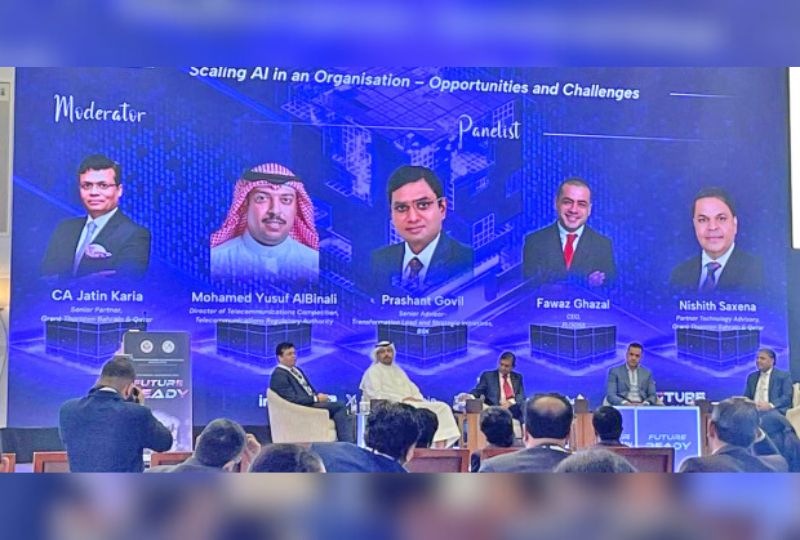
Senior leaders from Bahrain’s finance, technology and regulatory sectors convened at a high-level panel hosted by Grant Thornton Bahrain to address the kingdom’s rapid technological transformation, emphasising the need to balance innovation, regulation and risk.
The session, titled ‘Technological Disruption: Balancing Innovation, Regulation and Risk,’ examined how fast-paced advances are reshaping financial services, digital infrastructure, regulatory expectations, and corporate operating models across Bahrain.
The panel explored disruption trends, including Artificial Intelligence (AI), the growth of micro-lending and digital payments, accelerated cloud adoption, and the role of telecom infrastructure in enhancing national digital resilience. Speakers noted the necessity of adapting to shifting customer expectations.
Distinguished speakers included: Flooss Bahrain CEO Fawaz Ghazal, TRA director of telecommunications competition Mohamed Yusuf AlBinali, BBK senior adviser for transformation lead and strategic initiatives Prashant Govil and Grant Thornton Bahrain technology advisory partner Nishith Saxena.
Panellists highlighted critical actions for organisations navigating continuous technological change, stressing that readiness for disruption is paramount.
Businesses must invest in robust digital foundations, modernising core technology, including cloud infrastructure, data management, cybersecurity and connectivity.
Companies also need to cultivate organisational agility to respond rapidly to shifts in customer needs, regulatory environments, and new technologies like AI and automation.
As innovation accelerates, it is crucial to strengthen governance and cyber resilience, reinforcing frameworks for cybersecurity, data protection and risk management.
Future ecosystems will require organisations to embrace cross-sector collaboration between telecom operators, fintechs, banks, and regulators to ensure safe, seamless customer experiences.
In every transformation effort, it is vital to prioritise the customer experience, designing solutions that are frictionless, secure, and highly personalised. Finally, technology investment must align with long-term strategy, directly supporting organisational goals and resilience.
The moderator of the panel discussion, Jatin Karia, senior partner at Grant Thornton Bahrain, underscored the omnipresence of technological change.
“Technological disruption is now embedded in every sector we work with. The organisations that will thrive are the ones that evolve their governance, strengthen their resilience, and prepare proactively for the opportunities and risks ahead,” he added.
Mr Karia concluded that the discussion reinforced a key insight: “readiness, not just innovation, will define leadership in the years to come.”
&uuid=(email))