

A wave of public mockery over error-ridden shop signs and menus has prompted MPs to demand action against outlets that, they say, are damaging Bahrain’s image with ‘nonsense Arabic and English’.
The call is being spearheaded by MP Dr Abdulhakeem Al Sheno after a constituent shared a viral social media post poking fun at a traditional bread bakery whose menu was riddled with glaring Arabic mistakes.
“What started as a joke online is actually a serious issue,” Dr Al Sheno told the GDN. “When a menu in a traditional bakery is written in incorrect, broken Arabic, it becomes a source of ridicule. This is not acceptable in a country that prides itself on its culture and language.”

Dr Al Sheno
Some of the misspellings feature types of bread, cheese and fish paste, alongside many others.

The word bread is wrongly spelled, alongside zaater, Mahyawa, cheese, labna and honey
He said the problem goes beyond a single bakery and reflects a wider lack of oversight on commercial signage and printed menus across the country.
“We are not speaking about minor spelling errors. We are talking about phrases that make no sense at all. This harms the customer experience and, more importantly, the country’s image in front of visitors and residents alike,” he added.
Dr Al Sheno said he would be raising the issue formally with the ministries and municipal authorities concerned to explore whether guidelines or inspections could be introduced for public-facing signage and menus.
“We want to protect the reputation of our markets and traditional outlets,” he said. “Our heritage bakeries and restaurants should be a source of pride, not online ridicule.”
Parliament’s financial and economic affairs committee chairman MP Ahmed Al Salloom, who is also president of the Strategic Thinking Bloc and treasurer of the Bahrain Chamber, said there was a clear distinction between creative branding and outright linguistic chaos.
“There is a difference between intentionally ‘playing around’ with words in a shop name for branding purposes, which is acceptable and sometimes clever, and a menu that is simply nonsense,” Mr Al Salloom said. “What we saw in this case was not creativity. It was carelessness, in my opinion.”

The bakery covered some of the misspelled Arabic menu with a printout including correct spelling
He stressed that menus and signs play a part of the commercial identity of a business and reflect directly on the professionalism of the sector as a whole.
“Restaurants, bakeries and cafés are part of Bahrain’s tourism and hospitality offering. When a visitor reads a menu that is full of mistakes, it sends the wrong message about standards,” he said.
He has pledged to take up the case with Industry and Commerce Minister Abdulla bin Adel Fakhro during the week.
Parliament second deputy speaker MP Ahmed Qarata questioned why there was no system to review signage and menus before they were displayed to the public.
“How are these signs and menus allowed to go up without anyone checking them?” Mr Qarata asked. “It may look funny on social media, but in reality it harms the country’s image.”
He called for clearer responsibilities to be assigned to the relevant authorities to monitor commercial language use, particularly in outlets serving the public.
“This is not about policing creativity. It is about setting a minimum standard of respect for our language and ensuring that English translations are also correct,” he added.
MPs believe the issue can be addressed through simple awareness campaigns, basic review procedures and co-operation with shop owners.
“This is an easy problem to fix if there is the will,” Mr Qarata said. “All it takes is someone to check before printing.”
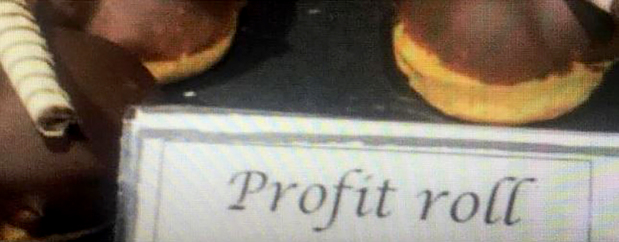
There have been numerous examples featured in the GDN of English spelling mistakes (and we’ve made a few bloopers ourselves over the years) with some becoming tourist attractions. For example, an enthusiastic new member of staff at an outlet with little grasp of the English language offered to write the helpful signs on the dessert offerings and came a cropper when it came to profiteroles.
Instead, he called them ‘profit rolls’ and they instantly became a social media sensation. The mistake proved profitable!
“I tried correcting it but received a barrage of complaints from customers who loved the spelling so much!” recalled Stevie George of Wembley sports lounge in Juffair. “So it became a permanent fixture!
“People came just to see the sign, taste the dessert and post it on social media – it was crazy! We even had a busload who said they only came for the Profit Rolls!”
A profiterole is a filled French choux pastry ball with a typically sweet and moist filling of whipped cream.
mohammed@gdnmedia.bh
&uuid=(email))