

Bahrain's main human rights body can now make unannounced visits to detention centres as part of a raft of amendments to increase its powers.
The amendments to the law governing the National Institution for Human Rights (NIHR) also allows for operational restructuring and to further engage with non-governmental organisations (NGOs).
They were issued by His Majesty King Hamad last week in a bid to address issues raised by Geneva-based International Co-ordinating Committee of National Human Rights Institutions (ICC), which awarded the NIHR a B rating earlier this year.
An application by Bahrain’s rights watchdog was reviewed by the ICC’s Sub Committee on Accreditation (SCA) Asia Pacific Office in May, which is affiliated with the United Nations Office of the High Commissioner for Human Rights (OHCHR).
It listed six reasons for not giving the NIHR an A rating – its board appointment process and members’ qualifications; the presence of four MPs on the board; the fact that commissioners work on a full-time basis, rather than part-time; allegations that some complaints by “human rights defenders” were not fully investigated; the need for the NIHR to give notice before conducting prison visits instead of having powers to stage surprise inspections; and a perceived lack of engagement with other NGOs in Bahrain.
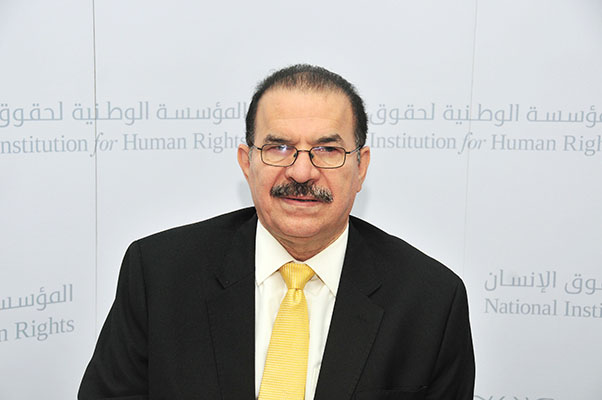
“NIHR is given more powers to function as the main body to promote human rights and protect rights of all people in Bahrain,” NIHR vice-chairman Dr Abdulla Al Deerazi told the GDN.
“The new law allows NIHR commissioners to conduct unannounced visits to prison facilities, which is a good sign.
“Furthermore, the four MPs who are NIHR commissioners will now be non-voting members in order to ensure decision making cannot be influenced.
“We are now given more strength to contribute to the society and increase our engagements or consultations with NGOs.”
He said the amendments would also see some commissioners switch from full time to part time, as stated by the ICC in its assessment.
“Those decisions will be reviewed to know how many members will function full time,” he added.
The B ranking meant the NIHR would not be able to vote or speak at Human Rights Council meetings, the GDN earlier reported.
It also meant the rights watchdog was not found to fully comply with the Paris Principles – which relate to the functioning of human rights groups.
“We can reapply anytime and especially with amendments to the law following a Royal Decree we are looking forward to getting an A rating in the future,” added Dr Al Deerazi.
Other groups reviewed with Bahrain were from the Ivory Coast and Montenegro who were also granted B status, while A grades were awarded to groups applying from Zimbabwe, Samoa and Uruguay.
Ranking
Qatar is the only GCC country to have a human rights group given an A ranking by the UN accreditation body.
The NIHR was formed in 2009 following directives from The King to work with state agencies and draft Bahrain’s rights reports, hold conferences and workshops, and develop efforts to promote human rights.
It was restructured in 2013 when new members were appointed for a renewable four-year term. It is headed by its chairman and Shura Council member Dr Abdulaziz Abul.
In June, the NIHR announced it had registered 75 complaints of alleged violations since the start of the year, compared with 36 for the whole of last year.
Complaints included issues related to court verdicts, medical care for inmates, prison visits, travel bans and government housing delays.
sandy@gdn.com.bh
&uuid=(email))