

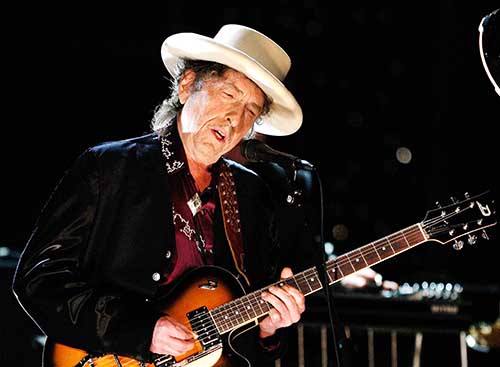
I CONSIDER myself a poet first and a musician second. I live like a poet and I’ll die like a poet” – So said Bob Dylan, in an interview in 1978 with Melody Maker, and with the second half, strictly speaking, he was quite wrong.
There are a few poets, living or dead, who could have filled venues around the world, consistently, for half a century. A few poets could have sold more than 100 million records and earned millions of dollars. A few poets, also, could have written quite so many songs that are quite so easy to whistle.
In a parallel world, even so, perhaps there was a Dylan who never picked up a guitar. Who wrote the same words, at the same time, and published them in slim anthologies, bought only by aficionados of written verse.
Such readers would have learnt, to their delight, of “haunted, frightened trees”, of the socialite who “used to ride on a chrome horse with your diplomat”, and of the women the young Robert Zimmerman beseeched to “lady, lady, lay, lay across my big brass bed”. They would have read of businessmen drinking his wine, and ploughmen digging his earth, of “a long black cloud... coming down”, and of ribbons and bows falling from curls.
Such a poet, probably, would not have sold out concert halls, because poets rarely do. Perhaps he’d have just been on the pavement, thinking about the government.
Would he have won the Nobel prize for literature, as the real Dylan has done? The answer, my friend, is blowing in the wind. Had he done, though, and on the back of writing like this, no one would have regarded the award as populist, low-brow, or even remotely ill-deserved. In the words of the Swedish academy that gives the prize, Dylan “created new poetic expressions”. The songs are a bonus.
T L
&uuid=(email))