

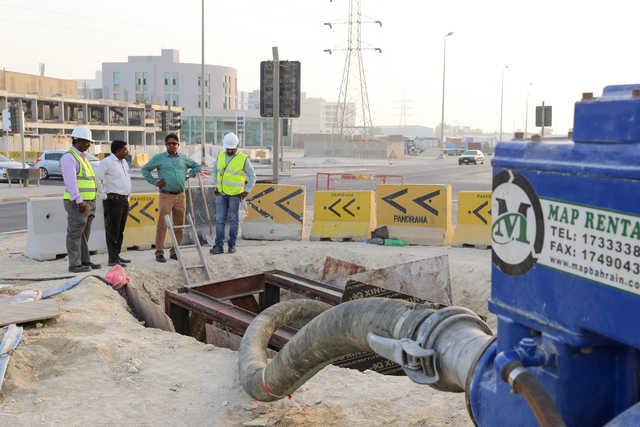
LABOUR inspections have started across the country to ensure the adoption of a summer ban on outdoor work, as unionists warn of the dangers of heat exhaustion.
Bahrain enforces the ban annually from midday until 4pm in July and August to protect labourers from scorching summer temperatures.
It began yesterday and aims to protect the workforce from potentially fatal heat-related medical conditions.
The General Federation of Bahrain Trade Unions (GFBTU) also started an awareness campaign yesterday to arm labourers with necessary tools to protect themselves from heat exhaustion and sunstrokes.
Labour and Social Development Ministry Under-Secretary Sabah Al Dossary told the GDN yesterday that inspections have already begun, as officials aim to cover around 34,000 firms across the country.
“We haven’t had any violations yet, but we expect to have some in the first few days of the ban, especially from foreign and new companies that don’t know about the ban,” he said.
“However, I don’t think there will be many violations, especially with the increase in fines – it used to be from BD50 to BD300 but it has gone up to BD500 to BD1,000, so companies will be careful.
“We will be inspecting 34,000 companies in the private sector which have nearly 150,000 employees.
“There will be inspections every day until August 31.”
The ministry has already launched an awareness campaign, through billboards and multi-lingual leaflets, informing business owners and workers about the ban.
The dangers of heat exhaustion and how to avoid sunstrokes over the next two months were also highlighted by the GFBTU during a meeting with employees of waste management company Urbaser at the Isa Town Traditional Market.
“In Bahrain there are hundreds of thousands of migrant workers working in the construction and cleaning sectors,” said GFBTU assistant secretary general for occupational health, safety and environment Mohammed Al Musaed.
“Their work situations force them to work under direct sun light during high temperatures, sometimes reaching 50C, and during high humidity reaching over 80 per cent during the peak of summer.
“Under such physical conditions and risk to the health of the workers in general, the risk of heat exhaustion in particular increases which can, in severe cases, lead to loss of life.”
Unionists also distributed flyers written in four languages – Arabic, English, Hindi and Urdu – that contained an explanation about heat exhaustion symptoms along with instructions and tips on how to avoid it.
“The continuation of sweating for a long time reduces the water stocks in the body and causes dehydration, which causes overheating,” stated the flyer.
“Symptoms include intense sweating, headaches, loss of appetite, muscle contraction and acute pain, accelerated heart rate and more.
“You should not expose yourself to high temperatures for long periods or to direct sunlight.
“Drink water gradually instead of all at once, wear cotton clothes that breathe easily and something to protect your head from direct exposure.”
The law, which has been in place since 2007, carries a punishment of up to three months in prison and/or fines of between BD500 and BD1,000 for each worker found working outdoors during the ban hours.
The GDN previously reported that the ministry urged all organisations with outdoor worksites to be committed to the ban, and provide all means to protect workers from potential summer diseases.
Firms were also urged to reorganise work hours around the summer ban to ensure projects and business were not affected.
Other GCC countries implement a three-month ban, starting on June 1 in Oman and Kuwait, and on June 15 in Saudi Arabia, the UAE and Qatar.
Rights campaigners have been seeking an extension in Bahrain for years, but have faced opposition from business owners.
ghazi@gdn.com.bh
&uuid=(email))