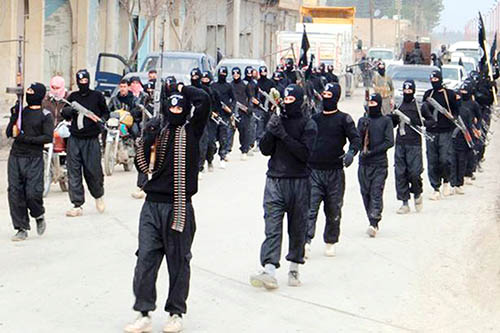
Bahrain: GCC authorities should monitor people living within their borders to identify those who have been radicalised by extremist groups, according to a leading expert.
Atlantic Council researcher Owen Daniels said this could protect “likely targets” of Islamic State (IS) affiliates in Gulf countries, including Bahrain.
He spoke to the GDN following bombings in Paris that killed 130 people and twin suicide bomb attacks in Beirut that killed 44 people.
Latest estimates released by the US Central Intelligence Agency show that IS may have up to 31,000 fighters in Iraq and Syria, many of whom are foreign recruits.
An estimated 20,000 fighters from almost 80 countries have travelled to Syria and Iraq to fight with extremist groups, according to statistics from London-based International Centre for the Study of Radicalisation and Political Violence (ICSR) and New York-based Soufan Group.
The figures suggest that while about a quarter of the foreign fighters are from the West, the majority are from nearby Arab countries, such as Tunisia, Saudi Arabia, Jordan and Morocco.
“At least six of the Paris attackers have been identified as European nationals,” said Mr Daniels, who is an expert on Middle East peace and security at the Washington-based think tank.
“Preparedness should not only mean ramping up surveillance against external threats from IS, but also continuing to monitor individuals at home who may have been radicalised.
“Countries in the region should be more worried about the possibility of IS-inspired attacks by radicalised individuals already living within their borders. Manama must continue to closely monitor returning Bahraini nationals who have fought in Iraq or Syria and have suspected ties to IS, and co-ordinate with the other GCC states to track returning fighters.
“Bahrain should also learn from the tragic attacks in Kuwait and Saudi Arabia earlier this year and protect vulnerable sites like mosques that could present likely targets to local IS affiliates.”
He also warned people in the region not to get dragged into sectarian conflict, which he said was the focus of the terrorist group.
“The Beirut bombing, the Kuwaiti mosque bombing in June, and earlier attacks in Saudi Arabia were all carried out against Shi’ite targets, possibly with the aim of inciting violence.
“Governments in the region must be on the lookout for attacks against populations that IS views as high-priority targets.
“Iraq and Syria’s neighbours and the Gulf states must remain vigilant, particularly as increased pressure and air strikes cause IS to lash out beyond its home
territory.
“IS-controlled territory in Iraq and Syria is decreasing slowly, and the group may respond to losses on the ground by trying to achieve ‘successes’ abroad to maintain its victorious image.
“The GCC should continue to share intelligence and co-ordinate with the US on counter-terrorism and the threat of foreign terrorist fighters.
“As the fight against IS progresses, it will be important to monitor the group’s strategy and guard against the possibility that IS may turn to decentralised, asymmetric tactics in order to survive.”
The GDN last week reported on a video in which IS militants warn of further retaliation against countries taking part in air strikes against the militant group in Syria.
In the video, the IS, which claimed responsibility for the Paris bombings, specifically threatens an attack in Washington, DC.
According to reports, the US-led coalition has launched more than 4,500 air strikes against IS targets in Iraq since its campaign began on August 8 last year.
In neighbouring Syria, the US along with Bahrain, Jordan, Qatar, Saudi Arabia and the UAE have also carried out more than 2,700 attacks on IS-held areas since September
last year.
raji@gdn.com.bh