

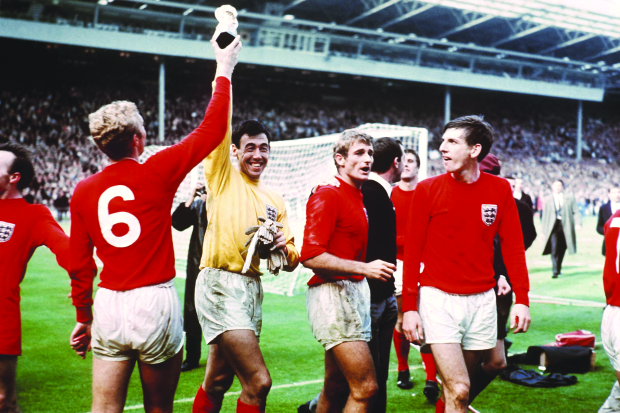
AS a football-mad ‘oldie’ in Bahrain, I was saddened when Gordon Banks died. There is something about being a goalkeeper that lends itself to reflection. Perhaps that is why so many writers, from Albert Camus to Sir Arthur Conan Doyle, liked to play in that position.
With the exception of the famous Colombian goalie René “El Loco” Higuita, keepers tend towards calmness and lack of flamboyance. If their team is attacking they stand alone, spectators to the action. When they represent the final line of defence, their mistakes or glorious saves make the obvious and all too visible difference between success and failure.
At around the same time as the late Gordon Banks was helping Stoke City to their one big triumph, the 1972 League Cup, the film-maker Wim Wenders released his acclaimed film The Goalkeeper’s Fear of the Penalty. In that film the principal character explains the existential dilemma: standing alone for a penalty, the keeper has to decide which way to dive before the man he is facing even strikes the ball. In this situation flashiness will not help you. Calmness may.
Perhaps this is why Banks became one of the most popular members of the 1966 World Cup-winning England team. With a childhood and adolescence that might have been scripted for a Ken Loach movie, he did not belong to one of the glamour sides of English football. His moments of glory were inevitably negative ones – stopping goals being scored. But he is especially revered for one single moment in his career, the save from the superb Brazilian player Pelé in the 1970 World Cup. It is still celebrated nearly half a century later.
Many people will remember the way a face carved out of granite would be split by a smile that could warm a Midlands training ground in January. Gordon Banks was modest and straight-forward as well as being a great sportsman. Those who saw him play were the lucky ones.
&uuid=(email))