

AS an ex-resident of Zimbabwe, now in Bahrain, I look back on a story of lost hope. In the mid-1960s, when decolonisation of Africa was at its peak, most of the continent was richer than East and South Asia.
Many Asian countries now have per capita incomes that are far higher than those of African nations. There is no more tragic case than Zimbabwe, once known as the bread basket of Africa, which by the early years of this century struggled to feed its people due to drought and catastrophic mismanagement.
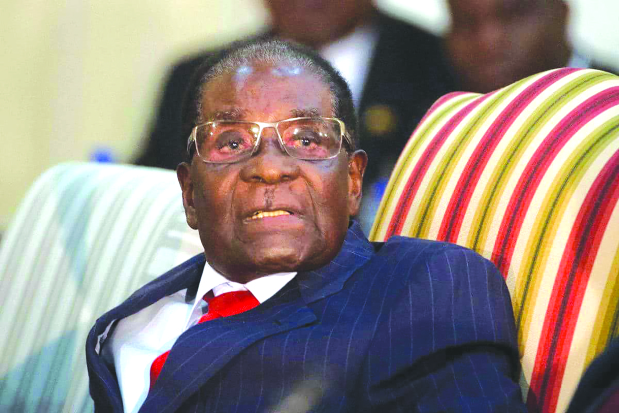
The policies were the handiwork of Robert Mugabe, who ruled Zimbabwe from 1980 until his ousting by the army in 2017. He died at the age of 95. With his election as prime minister Mugabe carried high hopes that a multi-ethnic democracy could succeed a racist regime. Instead, he turned his country into a failed state of penury and murderous repression.
Sub-Saharan Africa has copious resources. It may yet entrench prosperity and pluralism but it has been held back by governance ranging from the incompetent to the murderously venal. Perhaps Mugabe’s passing may make the transition symbolically easier to secure but the damage has been immense. And the lessons of what went wrong will need always to be recalled,
Mugabe’s first steps were encouraging. Despite still calling himself a Marxist, he reassured Zimbabweans that there would be no retribution or confiscation. Yet it was not long after independence that the liberation movement split and internecine conflict erupted between the Shona and Ndebele groups. The Zimbabwe National Army perpetrated a series of atrocities against the Ndebele from 1983 to 1987 to shore up Mugabe’s rule, killing some 20,000 people.
Having insulated his rule from popular protest by savagery, Mugabe presided over increasing rural hardship in the 1990s. Instead of reassuring commercial farmers, he began to expropriate their land to reward his supporters. By the turn of the century Zimbabwe had amassed vast debt and was running huge deficits.
The country experienced economic collapse, hyperinflation (annual inflation by 2008 was estimated at 231 million per cent), an epidemic of cholera, electoral fraud and arbitrary violence. Mugabe’s eventual removal at the age of 93 was a merciful release but Zimbabwe remains impoverished and rife with corruption.
Sub-Saharan Africa is the most pressing global challenge for development, and this can only be done by building better institutions. The route to development in Africa, as it has been in Asia, is through freer markets, trade and foreign investment.
Aid has a crucial role in providing technical guidance to businesses, but not in big projects for governments, which are an invitation for corrupt administrations to enrich themselves. And to achieve this requires a clear acknowledgment of the disastrous legacy of the autocratic, kleptocratic model of government that for decades Mugabe exemplified.
&uuid=(email))