

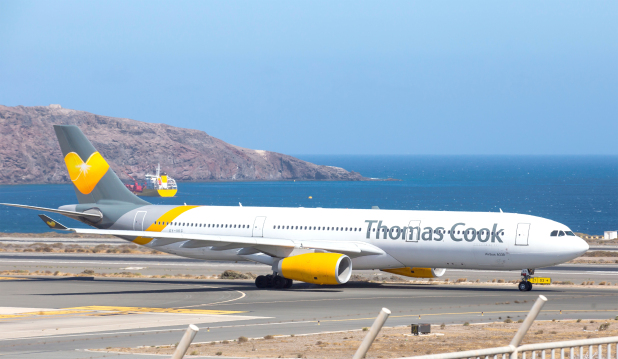
MANY of us in Bahrain have fond memories of happy Thomas Cook holidays. Its collapse, however, is a disaster for its 21,000 employees, who have lost their jobs and may receive little by way of compensation. It is also a nightmare for the failed travel group’s 650,000 customers who find themselves stranded overseas or with their holiday plans in chaos.
Many face an anxious few days and even weeks while arrangements are made to bring them home. Those entitled to compensation may have to wait much longer to find out what payout, if any, they will receive. The list of victims includes members of the company’s pension scheme which will now end up in the hands of the pension protection fund, which means automatic cuts for pensioners. All those affected deserve our sympathy.
Nonetheless, no one needs to shed any tears over the demise of Thomas Cook itself. Of course the disappearance of a business that has been a prominent feature of the corporate landscape for 178 years marks the end of an era. From its origins in 1841, when its eponymous founder organised a special train to take 500 passengers for a temperance meeting, through its nationalisation in 1948 and later privatisation in 1972, to its modern incarnation as a global travel group spanning hotels, airlines and package tour operators in 16 countries, it has arranged holidays for generations. Yet it has only itself to blame for its demise.
In reality, the seeds of the company’s collapse can be traced as far back as 2007 when it embarked on an ill-starred merger with rival MyTravel Group. It was already clear then the extent to which the Internet was transforming the travel sector. The expensive deal increased the company’s exposure to a troubled sector while saddling the company with debt. Similar mistakes were made when Thomas Cook merged its British retail operations with those of the Co-op, nearly doubling its exposure to the high street even as it was clear that much travel market activity was going online.
The biggest lesson of this episode is already clear. Companies that fail to adapt to the rapidly changing world around them will die. That is not something to lament. Every Thomas Cook customer who wants to go on holiday next year will be able to do so, quite probably to the same hotels as before. Other companies whose business models are better adapted to the demands of the digital age will quickly fill the gap in the market, as indeed many are already doing. This is not capitalism in crisis. It is exactly how the system is supposed to work.
&uuid=(email))