

Bahrain: An expected rise in global temperatures could seriously threaten Bahrain’s water resources, an expert has warned.
Last year was the warmest on record and this year may be even hotter, according to the World Meteorological Organisation.
As a result, sea levels could rise causing more salt water to intrude into the groundwater, said Arabian Gulf University water resources management programme co-ordinator Professor Waleed Khalil Zubari.
“Climate change will add more pressure on the already stressed water supply system in Bahrain,” he told the GDN.
“A rise in sea levels will affect the low-lying islands in terms of coastal water infrastructure. And a rise in temperature will also mean increased demand for water by humans, animals and plants.”
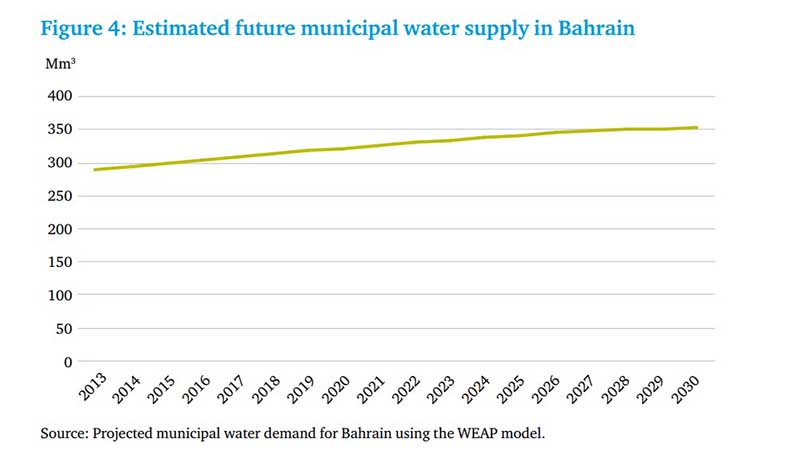
Bahrain relies on five desalination plants which produce more than 210 million cubic metres of municipal water supply per year; in 2012
it was about 230m cubic metres.
Desalinated water contributed about 90 per cent of the municipal water supply while groundwater made up the rest.
With a growing population, Bahrain faces challenges to achieving a sustainable water supply system.
Making matters worse would be increased associated costs, including money to buy natural gas used to power the desalination plants.
“Currently, the utility responsible for water supply has very low cost recovery in view of the subsidised tariffs,” said Prof Zubari.
However, that might improve if the subsidies are lifted in March as planned.
Prof Zubari also cautioned that Bahrain’s drinking water supply which comes from the Arabian Gulf could be at risk due to pollution.
“The desalination plants depend on water from the Arabian Gulf but pollution and contamination due to extensive oil-related and non-oil related activities pose a serious threat,” he said.
“Therefore, securing drinking water supply under emergencies is becoming a major concern not only for Bahrain but also for the GCC countries relying on the Arabian Gulf for their water.”
Prof Zubari also pointed out the high interdependency between water, food and energy in GCC countries.
“To make enough food to support a growing population, more water and energy are needed. To make water accessible and clean for human consumption energy
is needed and producing energy requires water,” he explained.
“The interdependency is intensifying in the region as demand for scant resources increases with population growth, changing consumption patterns and low management efficiencies in both supply and
demand of water, food and energy.
“Trying to achieve security in one of these sectors independently without addressing trade-offs with the other two sectors will endanger the sustainability and security of all three.
“Therefore, we need to adopt a water-energy-food nexus approach which will provide an opportunity for innovation and learning aimed at minimising security risks and maximising opportunities and enhancing resource efficiency.”
shahlaa@gdn.com.bh
&uuid=(email))