

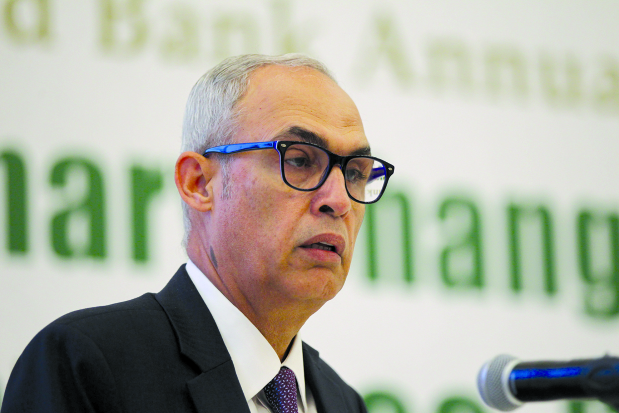
MANAMA: Islamic finance is ideally suited to long-term project finance and therein lies a vast opportunity for regional Sharia-compliant financial institutions, according to Central Bank of Bahrain (CBB) Governor Rasheed Al Maraj.
Talking to the GDN on the sidelines of the 14th edition of the Accounting and Auditing Organisation for Islamic Financial Institutions (AAOIFI)-World Bank Conference at the Gulf Hotel Bahrain yesterday, Mr Al Maraj said industry stakeholders need to figure out ways to channel the liquidity of Islamic investments into more impact-focused funds and sectors.
In his keynote during the conference, the CBB Governor said governance and compliance are the bedrock of the financial sector and have become even more crucial after the global financial crisis.
Sharia governance and compliance add an additional dimension for the Islamic finance industry, and the lack of regulatory compliance results in loss of confidence as it happened in the US and Europe, he said.
“The lack of Sharia compliance may result in something even more damaging – the loss of reputation and public trust. Islamic financial institutions need to focus on this area and try to become a role model in governance and compliance.”
Talking about another major theme of the conference, he said with the entry of fintech, the financial services sector is in the eye of a storm.
“We are seeing major changes in business models and regulators are having a hard time keeping pace with innovation.
“Customers are demanding new ways of fulfilling their financial needs, more conveniently and at lower costs.
“A financial institution that does not redefine itself in line with the customers’ demands risks becoming obsolete and irrelevant within no time,” said Mr Al Maraj.
According to the regulatory official, for Islamic financial institutions, technology disruption via the blockchain, crowdfunding, and unregulated financial services, is as much a threat as an opportunity.
“It is good to see that lately, Islamic banks have made significant strides towards mobile and Internet banking. Increasingly we see a partnership developing between tech companies and banks to come up with innovative fintech solutions,” he added.
The CBB Governor said the need to invest in capacity-building and development of human resources was imperative for the sector.
“We need ethical, committed, competent and trained people to lead the Islamic finance sector. They should also have a clear vision and strategy.
“The question every Islamic finance leader needs to ask himself is: Are we investing enough in grooming the future leaders in Islamic finance?”
Developing specific and customised training programmes for Sharia scholars, banking professionals, lawyers, board members and senior management of IFIs is essential, said Mr Al Maraj.
“More than that, managements and boards have a duty to create a culture of compliance, efficiency, and ethics in their respective institutions so that honest and competent people are attracted to work for IFIs. Without first-class people you cannot sustain the industry’s growth momentum in the long term.”
avinash@gdn.com.bh
&uuid=(email))