

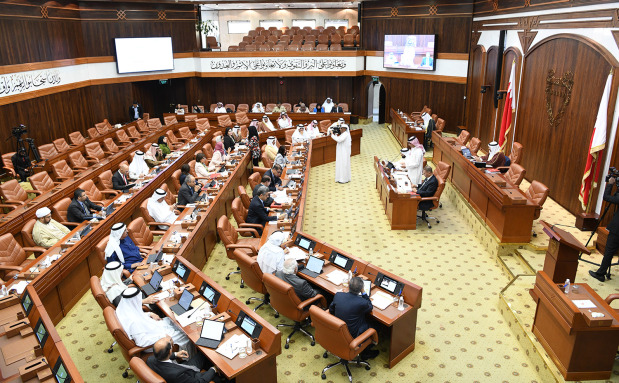
PROPOSED amendments that would have entitled widowers to receive the pensions of their deceased wives have been rejected by the country’s Shura Council.
Amendments to three existing laws that would have enabled the move was approved by Parliament in April in a bid to grant the same rights to men as given to widows.
The three laws rejected by the Shura Council during its weekly session yesterday are the 1976 Social Insurance Law, the 1975 Civil Servants Wages and Benefits Law and the 1976 Security and Military Personnel Wages and Benefits Law.
Rethink
The government and the Social Insurance Organisation (SIO) had asked MPs at the time to rethink the amendments because it would impose a burden on pension coffers, while affecting the shares of other deserving beneficiaries.
The amendments were backed by the Legalisation and Legal Opinion Commission and the Supreme Council for Women, which said it was “fair” and brought both men and women under equal terms.
However, Dr Jihad Al Fadhel, who is the chairwoman of the Shura’s services committee which recommended the rejection vote, yesterday said the amendments were unfair and had nothing to do with equality.
“This isn’t a default situation where someone has the right to receive their dead spouse’s pension, this was done to ensure a family’s financial situation is not harmed,” he said.
“Men taking part of the pension will come at the expense of other families – women without source of income or children – while these men are capable of handling their financial affairs.
“The existing pension legislation is clear and states if a widow remarries then she does not receive the payments, the same goes if her daughter gets married or her son becomes 21 – so pensions are clearly not inheritance.
“So what equality is being sought here?”
Shura’s legislative and legal affairs committee chairwoman Dalal Al Zayed also said the amendments were not based on any study and did not address varying situations.
“There is clear division between legislators, government bodies and members of civil organisations on these amendments,” she said.
“The Legalisation and Legal Opinion Commission, which amended the legislation, believes it is the righteous approach, but the commission did not draw up any restrictions.
“It does not mention what will happen if a man is married to more than one wife and what share of the pension he would receive – these amendments are not based on any study.
“Another example is those who have been newly naturalised and benefit from their deceased wife’s pension, while they are living in their homeland, means they are draining the funds and are not actual members of society eligible for welfare – the condition of permanent residency is missing here.”
Shura’s first vice-chairman Jamal Fakhro said during yesterday’s session that the situation with the funds was dangerous and there was no time to increase or change benefits.
Deficits
Finance and National Economy Minister Shaikh Salman bin Khalifa Al Khalifa said last week that pension funds were under huge deficits, which could lead to bankruptcy in 2028 for the civil servants coffers and in 2034 for the private sector coffers.
This is the second time Shura has rejected the amendments following two approvals by Parliament.
In order for the amendments to pass the National Assembly a joint vote for both chambers is necessary, which has never happened.
mohammed@gdn.com.bh
&uuid=(email))