

Bahrain's pension funds are set to go bankrupt in 14 years as the deficit reaches more than BD14 billion, according to an official.
Finance and National Economy Minister Shaikh Salman bin Khalifa Al Khalifa, who is also the Social Insurance Organisation (SIO) board chairman, told MPs in writing that public sector funds were expected to go bankrupt by 2028 and private sector funds by 2034.
He said while financial commitments for public funds are pegged at BD9.2bn and BD8.2bn for private funds, the available assets are BD1.1bn for the public and BD1.86bn for private.
“Contributions from the government sector collected as revenues last year were BD162m while spending was BD310m with the deficit being BD148m,” said Shaikh Salman.
“For the private sector, the collection for the same period was BD182m and spending BD245m with the difference being BD63m.
“The total difference between revenues and spending in government funds last year showed a deficit of BD61m and deficit of BD13m for the private sector.
“Studies indicate that the government pension funds will go bankrupt by 2028 and the private sector by 2034 with total deficits being BD14.4bn as at the end of last year.”
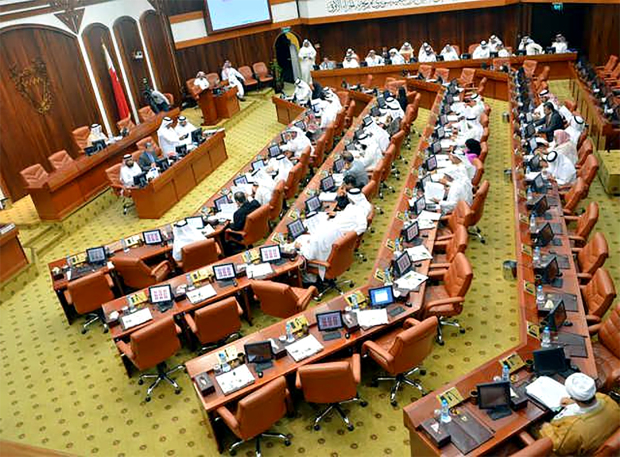
Shaikh Salman was responding to a question by Parliament financial and economic affairs committee chairman Ahmed Al Salloom on the status of the funds.
“We have assigned an expert to check on the funds’ status every three years with the deficit increasing year after year,” said the minister.
In a written response to another question, by MP Yousif Zainal, Shaikh Salman said the government was looking to privatise government services.
“We have privatised electricity, sewage and social housing services and we are looking at more possibilities.”
Industry, Commerce and Tourism Minister Zayed Alzayani said, in response to another question by MP Ahmed Al Ansari, that BD13.8m was collected as revenue from plots of land leased last year.
Until October this year, the revenues had reached BD12.1m.
“We had 82,592 valid commercial registrations (CRs) until September this year,” he said, in response to another question that people were cancelling CRs due to the increase in electricity and water tariffs.
“There were 11,547 CRs cancelled and 10,260 opened this year.”
MPs are also set to amend the 2015 Commercial Registration (CR) Law during Tuesday’s session as they would approve a proposal by the Shura Council to define violations and ease administrative intervention rather than punishment to help the business stay open rather than close.
Parliament will also vote on the 1998 Private Educational and Training Establishments Law to make Quran recitation compulsory in such establishments.
The same move has been approved under the 2005 Education Law, which covers government schools.
It is now under review at the Shura Council.
&uuid=(email))