

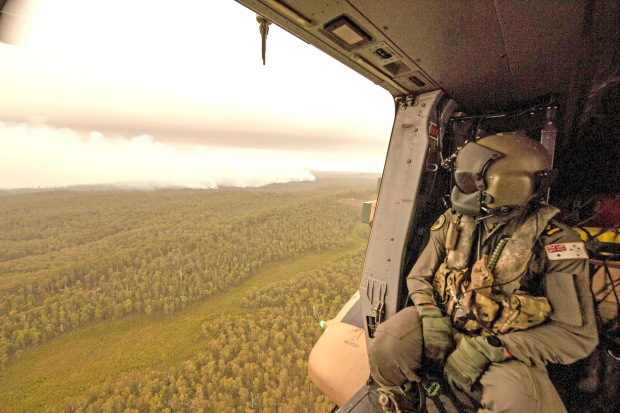
As fires rage in Australia, the toll on the natural world, meanwhile, almost beggars belief. Scientists at the University of Sydney believe it’s likely that half a billion animals have died, including about a third of the state’s koala bears.
Scott Morrison, the Liberal prime minister, has not been having a good crisis. Before Christmas, with fires already raging, he was criticised for taking a family holiday to Hawaii. “I don’t hold a hose, mate,” he retorted. Since cutting short his vacation, he has been both defensive and tone-deaf, at one point likening the challenge of the fires to that of the Australia-New Zealand Test match. A long-term champion of Australia’s fossil fuel industry and an outspoken defender of coal, he has insisted that “it’s not a credible suggestion” to make a link between climate change and the fires. Australia does, indeed, routinely suffer bushfires, with173 people dying in the “Black Saturday” fires of Victoria in 2009. The unprecedented length and severity of these ones, however, are the result of both the worst spring drought on record and the highest summer temperatures ever recorded. It is difficult to map a direct link between the burning of fossil fuels and any particular disaster. But it’s possible, nonetheless, to note that extreme weather is becoming more frequent.
Most climate scientists agree that a warmer world will lead to the same phenomenon appearing more frequently and in more violent form. Keeping a lid on global temperatures is only part of the battle. As important, particularly in the short term, is preparing to mitigate any disasters. Not all countries face equal challenges. Being already hot, dry and prone to fires, Australia is particularly vulnerable to the longer, hotter summers that a changing climate is bringing. Other regions will need to prepare for floods, droughts, crop failures, insect infestations and outbreaks of disease.
Where damage to property becomes more likely, insurers will need to charge higher premiums. Last year, during bushfires in California, the global reinsurance firm Munich Re warned that extreme weather could turn insurance premiums into a social issue as poorer people became priced out of areas by the risk. As Australia’s embers eventually cool, insurers and homeowners will have to start asking themselves similar questions. Despite the best efforts of activists and governments alike, many still regard the threat of climate change as both nebulous and distant. Not so, when the flames lick at your door.
T L
&uuid=(email))