

A TOTAL of 7,582 expatriates are employed in the public sector, revealed an investigation into Bahrainisation levels in the country.
This is despite latest statistics showing that unemployed Bahrainis on the waiting list for government sector jobs make up 302 people with postgraduate degrees, 15,046 with bachelor degrees, 2,038 holding diplomas, and 1,327 with secondary school certificates or lower.
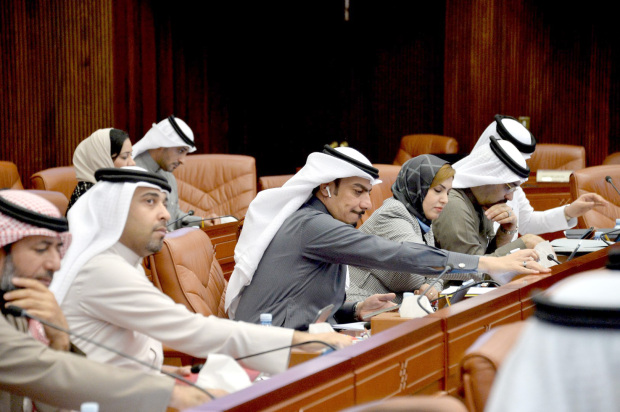
The figures were released as Parliament concluded its probe into Bahrainisation in the private and public sectors and has recommended action against six ministers for alleged violations.
The GDN yesterday reported that among the 37 recommendations mentioned in Parliament’s 379-page report, MPs want to increase Bahrainisation to at least 90 per cent in all companies that the government owns 50pc shares, cancel flexible work permits for expats, increase Bahrainisation at private medical facilities to 50pc, and allocate a special budget with a timeframe for full Bahrainisation in the public sector.
However, in detailed documents released to the Press yesterday, the Civil Service Bureau (CSB) told the Bahrainisation probe committee that foreign workers comprise 16 per cent of the total labour force in the government sector.
The CSB revealed that the allocated budget for salaries of expatriate civil servants reached BD60 million last year and BD59 million this year.
CSB officials also said 320 Bahrainis worked on contract basis at various ministries and government bodies, while 319 employees (298 Bahrainis and 21 expats) were on part-time or temporary employment.
Among the figures presented to the probe committee was the annual average cost of salaries for Bahrainis who opted for the voluntary early retirement scheme last year, which is BD126.3 million.
The parliamentary report includes 54 replies from relevant ministries, government bodies and companies and has been submitted to Parliament chairwoman Fouzia Zainal, who scheduled it for debate in next Tuesday’s session.
Salary
Among the replies was the Education Ministry which said its total workforce was 22,412 people including 3,872 foreigners, of which 3,691 were teachers receiving an average salary of BD448 without annual increases.
It also said that after 3,689 of its employees, including 2,968 teachers, took the voluntary early retirement scheme, its Bahrainisation level was at 80.53pc.
The Health Ministry also told MPs that it would achieve 79pc Bahrainisation this year, with 1,659 expat employees on its payroll and 50 Bahrainis on contracts.
There are 499 expats working at the Electricity and Water Authority, with an average wage of BD1,485 and 31 Bahrainis on temporary contracts.
The Labour Market Regulatory Authority also revealed that it has seven foreigners receiving an average wage of BD2,250 a month.
While the Foreign Ministry said it has 18 expatriates earning a maximum of BD3,395 a month, with three Bahrainis on temporary contracts, while its Bahrainisation level is at 96.7pc.
The Works, Municipalities Affairs and Urban Planning Ministry said it has 753 expats on its payroll, earning an average salary of BD753.
It also said it has 21 Bahrainis on temporary contracts, with its Bahrainisation level reaching 90pc by next year following the contract termination of 133 expats.
At Bahrain University, out of a total workforce of 1,535 people, 347 are expats who receive an average wage of BD1,500 a month.
Earning
While Bahrainisation plans at Bahrain Polytechnic are expected to be complete by 2024 with it currently standing at 67pc, with expats earning an average of BD2,455 a month.
Meanwhile, the Interior Ministry told the committee that until May of last year, 3,584 criminal, residency and traffic cases involved expatriates.
The Bahrainisation probe started in February last year and concluded earlier this week.
The GDN yesterday reported that the probe committee has recommended action against Labour and Social Development Minister Jameel Humaidan, Health Minister Faeqa Al Saleh, Works, Municipalities Affairs and Urban Planning Minister Essam Khalaf, Education Minister Dr Majid Al Nuaimi, Electricity and Water Affairs Minister Wael Al Mubarak, and Parliament and Shura Council Affairs Minister Ghanim Al Buainain, who is politically responsible for the CSB.
&uuid=(email))