

Manama: Bahrain-based BBK has launched a BD100 million ($265.3m) convertible bonds issue to boost its capital ratios.
The bonds issue will be open to subscription by shareholders from Sunday to April 18.
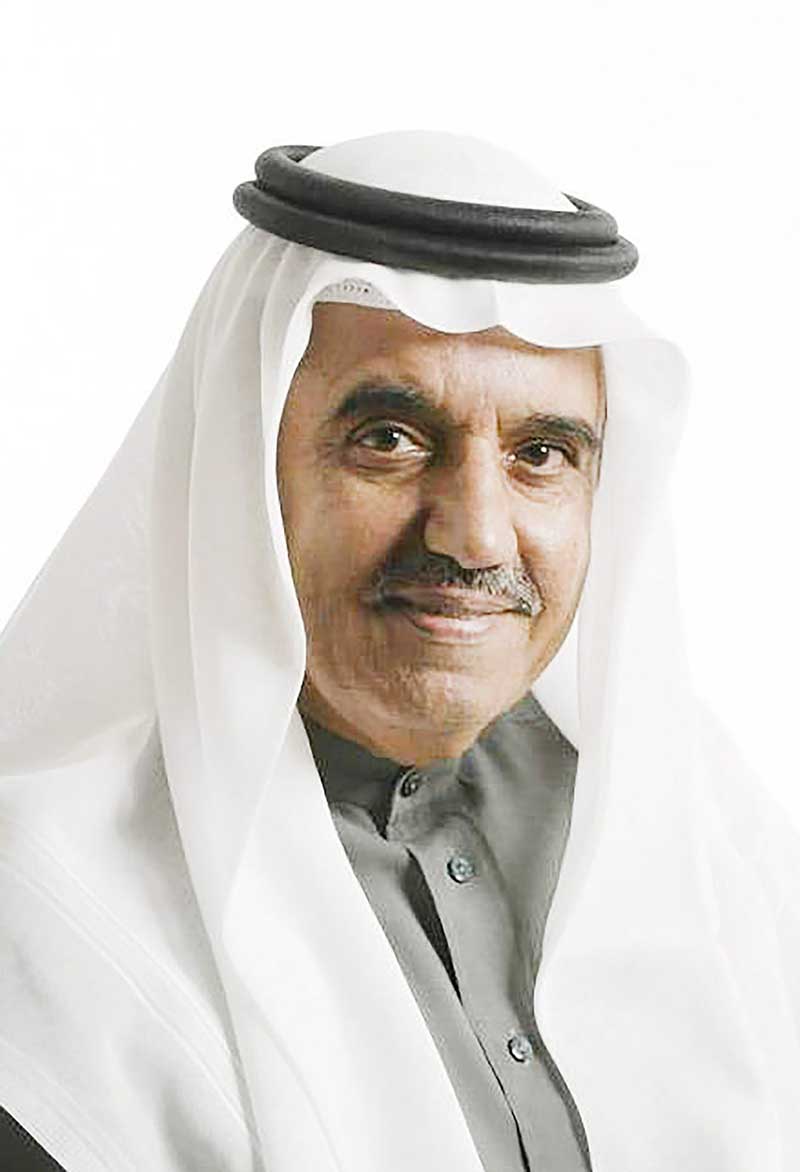
Chairman Murad Ali Murad told the GDN after the conclusion of the bank’s annual general meeting at the Gulf Hotel yesterday that the additional capital would be used for increasing the bank’s capacity to grow its asset base primarily through core lending activities.
“It would also fund strategic expansion initiatives, both local and global, and help us meet the increasingly demanding regulatory capital base required by the Central Bank of Bahrain (CBB) and regulators worldwide in line with Basel III requirements.”
Subordinated perpetual convertible bonds that provide an annual return to investors were chosen as the form of proposed capital increase as it was found to be the most cost-effective option after a detailed study by external advisers, he said.
“The securities are structured to meet CBB requirements while providing the bank with the capital it requires.”
The bonds are expected to yield eight per cent for the first five years after which the rate is reset to the equivalent of three-month Bahraini Dinar Interbank Offered Rate (BHIBOR) plus 5.52pc (the coupon).
BHIBOR is a daily reference rate based on the interest at which banks borrow unsecured funds from other banks in the local wholesale banking market.
The return is expected to be distributed semi-annually, in April and October of each year starting from October this year.
The prospectus and application form are available at BBK branches after the offer announcement was made in the local papers last week.
The bonds are priced at BD1 each and will be offered to shareholders in 11:1 ratio on a pro-rata basis, which means that for every 11 shares owned, shareholders can purchase one bond.
Shareholders wishing to exercise their subscription rights need to apply during the offer period. Shareholders also have the right to over-subscribe and transfer their rights to other shareholders or investors of their choice.
As the bonds are not issued initially as ordinary shares, shareholders equity will not immediately be altered as a result of the issue.
However, an option to convert the bonds into ordinary shares after three, four or five years has been reserved. The conversion will be subject to shareholder approval in an extraordinary general meeting.
Should such a conversion be effected, shareholders who have not subscribed to their full rights entitlement will see a dilution of their equity percentage.
Unless converted by the bank, the securities are perpetual and may only be redeemed after a minimum period of five years from issuance.
The chairman said a strong and stable financial footing has enabled the bank to invest in targeted growth opportunities, delivering sustainable growth, managing risk and improving long-term financial performance and returns for shareholders.
“Retail banking features strongly in BBK’s expansion and diversification strategy and income generated by assets and loans in our core domestic market remains the focus area even as the introduction of Basel III places more emphasis on risk-adjusted returns.
“Evaluation of opportunities for diversification and increased fee-based income is on the agenda. Development plans for the establishment of a local office in Turkey are well advanced.
“Other opportunities are also being investigated, in addition to possibilities to expand BBK’s services to north and west Africa. Trade finance has been identified as a major growth opportunity that has strong potential for BBK to assume market leadership.
“International trade finance also holds attractive prospects and work is in progress to develop new counter-party relationships,” he added.
Debtors’ book factoring and ancillary services are also under serious consideration as a secondary level of trade finance activity.
“Challenges have increased with the lower oil price, however we are fortunate that our strategy has placed us in a position that would enable us to avoid any drastic changes by creating a clear direction, solid foundation and provides agility in a rapidly changing world,” chief executive Abdulkarim Bucheery said.
The bank, Bahrain’s fourth-largest by assets, had a capital adequacy ratio, a key indicator of its financial health, of 14.87 per cent at the end of December, above a minimum requirement of 12.5pc.
“In terms of growth we will not see the same levels either for assets or liabilities, it will be much lower,” Mr Bucheery said.
The lender is expecting its balance sheet to grow in the range of 3pc to 4pc this year, after a year-on-year compounded rate of 8pc over the past eight years.
avinash@gdn.com.bh
&uuid=(email))