

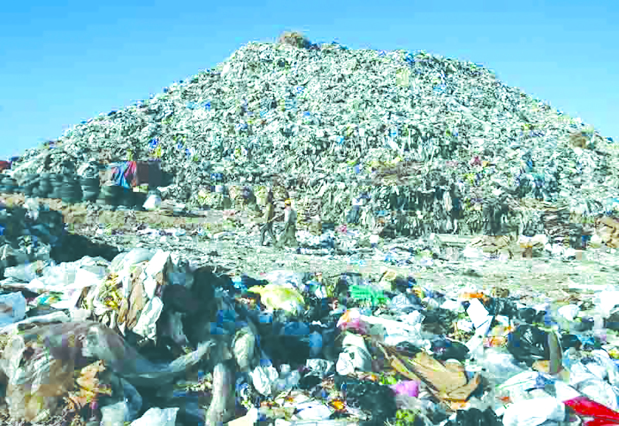
PLANS to combat the growing amount of dumped waste in Bahrain are being studied by researchers.
This comes as Bahrain produces 1.8 million tonnes of waste annually, which is considered the highest among the Gulf countries.
Challenges and possible solutions to the country’s waste management strategies were discussed at a forum organised by Bahrain University in co-operation with the British Embassy.
The Waste Management Forum, held at the E-Learning Centre at the university’s Sakhir campus, was attended by British Ambassador Roddy Drummond and Supreme Council for Environment (SCE) chief executive Dr Mohammed Bin Daina.
Dangers
Mr Drummond highlighted the experience of the UK in facing dangers of increasing amounts of waste, in addition to possible solutions to reduce its amount.
While Dr Bin Daina discussed local challenges in facing the growing amount of waste and methods of treating or disposing of it.
“The Kingdom of Bahrain produces 1.8 million tonnes of waste annually, which is the highest rate in the Gulf,” said UoB College of Science professor Dr Hanan Al Buflasa.
“Also, there are four companies accredited by the Supreme Council for the Environment to sort waste, treat and recycle what they can.
“The University of Bahrain hosts a huge number of students, therefore if we succeed in educating this student population then we have succeeded in sending a clear message to the community on the importance of preserving the environment and eliminating waste.
“There are personal initiatives and efforts by individuals in the community seeking to sort waste, which is evidence of a culture of waste sorting in the Bahraini society.”
She also noted the university’s initiative to eradicate waste on campus, including installing special containers for sorting waste.
The forum was also attended by a number of researchers and faculty members at the university, with participation of speakers from distinguished British universities in the field of waste management, in addition to speakers from UoB and private universities.
The GDN reported last month that a comprehensive strategy is being developed to significantly reduce the amount of waste buried at the country’s landfill site.
Works, Municipalities Affairs and Urban Planning Minister Essam Khalaf said at the time that the plan was to recycle, reuse or incinerate 98 per cent of the collected waste, with only 2pc being buried at the Hafeera Landfill in Askar.
Around 1.6m tonnes of waste was dumped at the landfill site last year – a drop of about 400,000 tonnes from 2018.
Domestic waste was at the top of the list with 546,822 tonnes, which is 36pc of the waste collected between October 2018 and September last year.
Construction waste came in second at 487,940 tonnes, which is 31pc, followed by commercial and industrial waste at 397,544 tonnes (25pc), and agricultural waste at 127,350 tonnes (8pc).
ghazi@gdn.com.bh
&uuid=(email))