

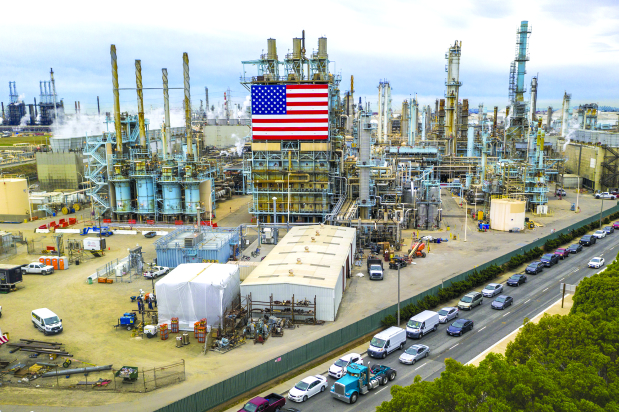
MANAMA: Plunging oil prices will cause excessive damage to the US oil sector, shows a report by a Bahrain-based think-tank.
The analytical report titled ‘Implications of the Corona Crisis: Oil Markets’, authored by Bahrain Centre for Strategic, International and Energy Studies (Derasat) researcher Abdulaziz Al Doseri suggests that there are limited instruments available to the US government to persuade Saudi Arabia to change the current price course.
The falling oil prices that coincided with the coronavirus crisis caused a huge shock to American stock markets.
In the beginning, US President Donald Trump commented on Twitter that these prices were good for consumers (March 9), but he blamed the price competition between Saudi Arabia and Russia, in addition to what he called ‘fake news’ for causing a recession in American stock markets at the time; overlooking the effects of the coronavirus and global concerns of its implications. At the same time, the US Treasury Department issued a statement in which it accused global players of manipulating oil markets and causing shocks.
On March 24, the US President appointed Victoria Coates as Special Energy Envoy to Saudi Arabia.
The next day, the Department of State announced better phone call took place between Secretary of State Mike Pompeo and Saudi Crown Prince Mohammed bin Salman Al Saud, in which they discussed the stability of oil markets, and the role of Saudi Arabia in the G20, as one of the most important countries for the stability of global energy markets.
This phone call falls within the context of US efforts to persuade Saudi Arabia to change its current oil policy. It is believed that such US efforts aim to initially convince the Saudis to refrain from dumping excessive quantities of oil during April, as announced earlier.
Members of the Senate, among whom was Kevin Cramer, continued their demands in a letter to Mr Pompeo, asking for a stricter position to counter what they called an economic war from Russia and Saudi Arabia against the US. In this letter, senators offered that Saudi Arabia completely abandons Opec and avoids investing in the Russian energy sector, in return for contributing to joint energy projects in the US.
Senators kept pushing, and Mr Cramer presented draft Bill (S.3572) to the Congress, calling for a withdrawal of troops and all US military equipment from Saudi Arabia within 90 days from the date it is passed, in an attempt to pressure Saudi Arabia to reverse its current oil policy.
Regarding the instruments currently at the US government’s disposal to deal with the fall in oil prices, the Congressional Research Service published a report that explains the policies available to the Congress to protect the oil sector under current conditions.
These are summed up in the following:
- Buying oil production through strategic reserves and enabling oil companies to pay their due taxes using oil (royalty-in-kind).
- Providing loans or collateral valued up to $500 million under law (H.R.1664) from 1999, which supports oil production companies and their supporting sectors in such circumstances.
- Implementing customs fees and restrictions on oil imports from Opec, Russia and others.
- Imposing sanctions on violators under terms of anti-dumping, with the feasibility of this course being uncertain.
The report concludes that these available federal instruments will find it difficult to correct the ailing market conditions, due to the coronavirus and its effect on destroying demand for all types of energy, and that there is no solution for oil markets except for all market-affecting factors to come together, starting with the recovery of demand to restoring production levels to where they were before the price competition. Despite all the aforementioned, uncertainty will continue regarding when markets are expected to recover.
avinash@gdn.com.bh
&uuid=(email))