

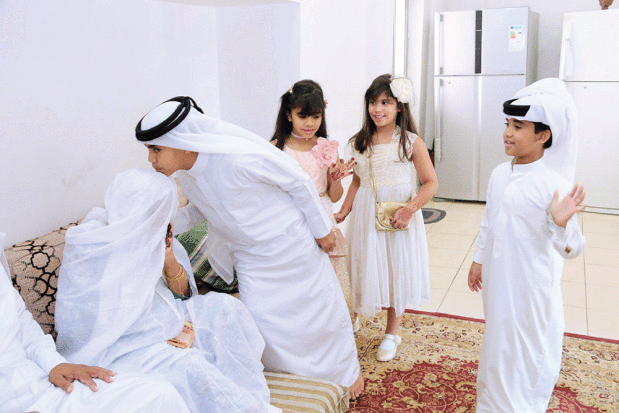
AS Muslims across the globe mark Eid Al Fitr tomorrow, the traditional family gatherings and grand celebrations will not be held in Bahrain due to precautionary measures to combat the spread of Covid-19.
It is customary for extended families and their guests to gather in a single household or majlis during the three days of Eid following prayers to mark the end of the holy month of Ramadan.
However, due to measures imposed to limit gatherings and introduce social distancing, many families have pledged to adhere to the preventive measures set in place while celebrating Eid within the confines of their homes.
“The entire world is going through extraordinary times battling the spread of Covid-19 and we need to adapt in order to protect our families,” said Mona Ebrahim, a Bahraini mother of three.
“Every year we gather at my grandfather’s house with all our extended family members to have lunch together and it’s usually a gathering of more than 60 to 70 people as neighbours sometimes join us.
“However, it is different this year as we are staying at home with just my husband and my children to keep my grandparents safe and ensure the safety of everyone by adhering to the restrictions in place.
“We are confident that this is a temporary crisis that Bahrain, and the world, will get through and we need to co-operate so it can be lifted by the grace of Allah very soon.”
Bahraini Abdullah Mohammed, 40, also said that this year’s celebrations would not only limit social gatherings but also the inability to give children the traditional Eid money as gifts.
He said his celebrations will consist of Eid prayers at home and having lunch with his immediate family members.
“The highlight of my Eid every year is watching all the children in our family and extended family line up to get the money from the elders,” he said.
“This year it’s different – I will send the money to their parents through BenefitPay to keep up the tradition, but it will not be the same as hearing the children laugh and seeing their joy while gathering the money.
“There is an unexplainable happiness that I get when giving children the Eid money and hearing them plan what they’re going to spend it on, so it’s gut-wrenching that we can’t do that this year.
“We are hopeful that this is a temporary situation the entire world is going through and we are praying that it will pass without anymore casualties.”
Another Bahraini, 78-year-old Aqeel Thamer, said this Eid Al Fitr would be unrecognisable because he will not be able to host his family at his house for the traditional feast.
He said he usually orders the traditional Eid ghouzi (meat and rice) for around 100 people every Eid where he hosts his family in his majlis, but has refrained from doing so this year.
“It makes me incredibly sad that this year I will not be able to invite my entire family over to have the traditional lunch at my house, which we have been doing for more than 40 years,” he said.
“These are difficult times and as a family we understand the importance of adhering to the measures in place to protect us from this disease.
“We have been blessed with mobile phones that allow us to make video calls and see our families, otherwise it would have been really hard.
“Hopefully, this time next year we will have overcome this disease and we can come together again as families.”
Essential businesses have remained open throughout the crisis, but mosques, cinemas, gyms, salons and entertainment outlets have been closed since March, while sheesha cafes, restaurants and cafes are limited to take out and delivery services.
Commercial and industrial businesses providing goods and services resumed operations on May 7 amid strict regulations, including having all employees and customers wear masks.
The non-essential businesses have also limited the number of people entering the outlets at any one time to limit overcrowding and enforce social distancing.
While salons will be allowed to reopen from next Wednesday following the extended holiday.
reem@gdn.com.bh
&uuid=(email))