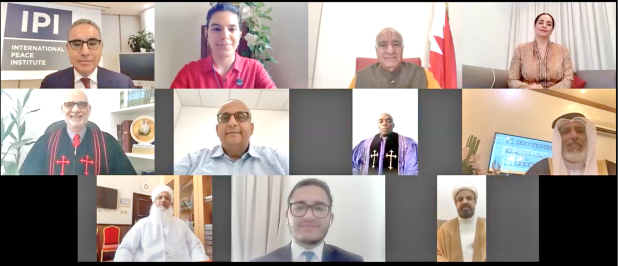
BAHRAIN has proved to be a shining example of peaceful co-existence in the face of adversity, according to a regional peace institute.
Interfaith leaders joined the International Peace Institute Middle East and North Africa (IPI Mena) in calling for greater unity, co-operation and solidarity across the multilateral system in tackling the challenges arising from the coronavirus pandemic.
The call came during a virtual conference, ‘Interfaith Solidarity in Covid-19’, hosted by the institute.
Imams, reverends, priests, pastors, religious and faith representatives across Islamic, Christian, Jewish, Hindu, Baha’i and Bohra faiths took part.
Ramifications
In his opening remarks, IPI Mena director Nejib Friji stressed the need to bolster multilateral tools to tackle the epidemic’s ramifications that have had direct impact across all social layers, and on vulnerable groups in particular – women, youth and the elderly.
Mr Friji told the GDN that such efforts are a key to combating the dangerous trend of xenophobia and racism that seem to be occurring in several countries around the world.
“Religious leaders are crucial civil society actors in the field of cultural diplomacy; they are all invaluable sources of fostering understanding, reconciliation, tolerance and reciprocal respect among religious communities which can provide a foundation for peace-building efforts,” he said.
“This event shows how Bahrain is an example of co-existence, peace and tolerance and how we must all come together to combat Covid-19 and all other pandemics that may arise in the future.
“We also show the solidarity of standing together to prevent extremists who would hijack faith and religion in the name of violence.”
He urged further solidarity and co-operation between all parties, at the local, regional and international level towards a proactive global response to the challenges facing the world and future ones posed by eventual pandemics.
King Hamad Global Centre for Peaceful Coexistence trustee member and representative of the Baha’i religion Shahnaz Jaberi noted the importance the Baha’i community placed in exploring the role of religion in enhancing unity, coexistence and brotherhood among fellow citizens to overcome social and economic consequences of the pandemic.
Her message was reinforced by Muharraq Grand Mosque Imam Shaikh Salah Al Jowder who reminded participants that key stakeholders not only come from state-related institutions and governments, but from international organisations, the private sector and individuals as the pandemic impacts all indiscriminately.
Bethel Church of Nations in Bahrain pastor Job Nelson focused on the silver lining the pandemic has brought in uniting people across religious faiths, ethnicity, race and social status and countering the divisions the pandemic has created through border closures and xenophobia.
Member of Bahrain’s Jewish Community Michael Yadgar said the pandemic had presented an opportunity to review the availability of effective healthcare.
Representative of the global Dawoodi Bohra community Mustafa Zakavi referenced religious scriptures in reinforcing the common duty of protecting each other by following healthcare guidelines.
He pointed out the important role women are playing in his community through their sewing skills to create face masks for medical staff and frontline heroes fighting the pandemic.
Platform
National Evangelical Church of Bahrain head Reverend Hani Aziz highlighted the importance of the World Health Organisation, the UN and organisations such as the IPI in providing a platform for unity during these trying times.
King Hamad Global Centre for Peaceful Coexistence member of the board of trustees Dr Shaikh Majeed Al Asfoor stressed that peace was the essential driver in uniting faiths.
Krishna Temple in Bahrain chairman Sushil Muljimal pointed out the important role governments can place in alleviating the burden on citizens.
Mr Friji also told the GDN that all those who took part in the conference praised the efforts of the government in combating Covid-19, the Supreme Council for Women in providing aid for women and the executive committee chaired by His Royal Highness Prince Salman bin Hamad Al Khalifa, Crown Prince, Deputy Supreme Commander and First Deputy Premier, in providing humanitarian and financial aid to those affected by it.
ghazi@gdn.com.bh