

THE rise in popularity and acceptance of telemedicine has helped contain the spread of Covid-19, a symposium heard yesterday.
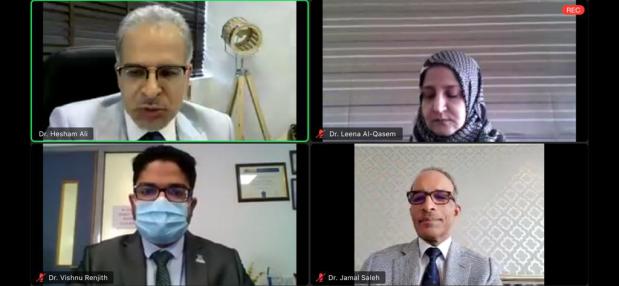
The importance and growth of telehealth was the focus of the three-hour online forum, ‘The Eighth Ethical Symposium – “Telehealth” (Ethical Considerations), organised by King Hamad University Hospital (KHUH).
The event was held under the patronage of Supreme Council for Health chairman Lieutenant General Dr Shaikh Mohammed bin Abdulla Al Khalifa.
Taking part were orthocare orthopaedic Dr Jamal Saleh, KHUH consultant endocrinologist Dalal Alromaihi and Bahrain Medical Society profession regulation department chief Dr Leena Alqasem.
“Telehealth is an important method of healthcare delivery that Bahrain is moving towards steadily over the past few years,” said Lt Gen Dr Shaikh Mohammed in his opening address.
“It has become an essential tool of patient care during Covid-19 pandemic.
“Telemedicine enabled continuity of care for many patients and eased the strain and the parallel damage that the pandemic could have placed on the health of people living in Bahrain.”
He praised the resilience of Bahrain’s healthcare institutions for demonstrating impressive capability “to act under pressure, to be innovative and to be committed to providing outstanding patient care under all circumstances”.
He added that Bahraini continued its efforts towards digital healthcare systems through the National Electronic Medical Record, and the National Health Insurance System.
Dr Alromaihi said telemedicine enabled people to seek healthcare help and diagnosis from the safety of their homes.
“Teleconsultation is a full consultation; I had patients first doubting the service, wondering how I could help them over the phone,” she said.
“Fortunately, with my speciality I can manage to get a lot of information I need by checking a patient’s history and looking at investigations from labs.
“In the end, they were impressed that I could help them.”
She said it was crucial to get full information and listening to a patient carefully.
“Sometimes it is helpful to see if the patients want a video call or a telephone call before the tele-session.
“Also, you have to use your gut feeling and see if there are any red flags and you need to see your patient face-to-face.
“However, the importance of telemedicine really shines during a pandemic, where patients can stay at home and help prevent spreading the disease.”
However, she said telemedicine should follow the same high standard as face-to-face care
“This includes adhering to professional guidelines, appropriate diagnostic testing and treatment.”
Dr Alromaihi also underlined the importance of communication skills to help doctors pass on the appropriate information to their patients.
Dr Alqasem referred to the lack of security on social media which might risk a patient’s private information being disclosed.
“Telemedicine is defined by the World Health Organisation (WHO) as providing care or helping from a distance,” she said.
“It was previously used in settings where the healthcare providers and their patients could not be physically present in the same place at the same time.
“The concerns with social media is that there is limited security.
“No matter how high your privacy settings or security levels are it will not be totally secure.
“When you put something out about a patient you are breaching their confidentially.
“Also, if you put something on the Internet you can really never remove it; it will always be there.
“Because of the limited amount of information we share through social media, the statements that we put can be interpreted differently through different people.
“We can use it to educate the public but not for direct patient care.”
noorz@gdn.com.bh
&uuid=(email))