

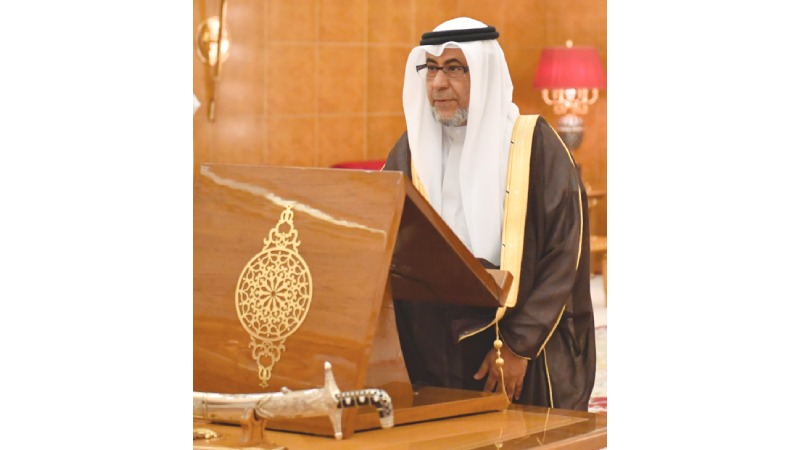
A NEW plant species protection law was partially approved by Bahrain’s upper chamber yesterday.
Discussions over the 46-article legislation will continue in the next session.
Once completed, it will be referred by the Shura Council back to Parliament for a second review due to differences on protection mechanisms as mentioned in law.
Parliament and Shura Council Affairs Minister Ghanim Al Buainain said the new legislation needed to be exact and precise, while praising the chamber’s amendments.
The law stipulates fines of between BD500 and BD2,000 for violators who infringe protection rights, conduct improper growth experimentation for hybrids, or harm species.
If the offence is repeated, the fine would be increased to between BD1,000 and BD4,000, a jail term of between three months to a maximum of one year, or both.
In all cases, the judge would have the right to order the destruction of the new evolved species, substances used and equipment.
Shura Council chairman Ali Saleh Al Saleh told members at yesterday’s weekly session that there should be no debate on the legislation since it was “purely technical”.
However, members had concerns about the scope of protection on newly found species and not the classification or scientific techniques used.
“We have concerns as Bahrainis are interested in plantation within their homes that could result in the discovery of new species,” said human rights committee chairman Ahmed Al Haddad.
“There are several international cases of theft of intellectual property for plants, in India and the US,” he added.
“The Indians came up with a new aromatic Basmati rice and because it was not registered the US registered it as a patent and claimed it was its own idea leading to a dispute.
“Government bodies can defend themselves but not individuals like simple local farmers.”
Shura public utilities and environment affairs committee chairman Dr Mohammed Hassan said the query was important.
“Protection for individuals, professional or amateur, is their responsibility unless the government thinks there is something unique and is actually a possible new species,” he explained.
“Local protection legislation are already of international standards considering that Bahrain is already a member of global organisations for over decades.”
Member Mona Almoayyed said the new law opens a new innovation door for agriculture.
However, she added that it comes with challenges related to scarcity of plots and availability of water.
“Specialised companies have been formed in Bahrain to invest in agriculture, but simple farmers are facing trouble getting their agriculture needs due to scarcity of plots and water to use,” said Ms Almoayyed.
mohammed@gdn.com.bh
&uuid=(email))