

A TASK FORCE has identified 93 flood-prone sites in the Capital Governorate as it gears up to tackle rains this winter.
A plan is in place to tackle emergencies, a top government official said, with the governorate divided into high, medium and low-risk zones.
A study presented by the Works, Municipalities Affairs and Urban Planning Ministry’s Works Affairs Under-Secretary Ahmed Al Khayyat to the Capital Board of Trustees detailed affected sites and action plans headed by an eight-member work team.
According to the report, 38 areas will need urgent action in the event of a heavy downpour while 37 more will require a prompt response. Eighteen sites will need periodic removal of accumulated rainwater.
The GDN reported last month that preparations are in full swing to tackle flooding as part of contingency plans ahead of the onset of Bahrain’s rainy season.
Heavy winter downpours in recent years have often resulted in widespread flooding, damaging homes, vehicles and commercial properties – and causing misery to scores of families.
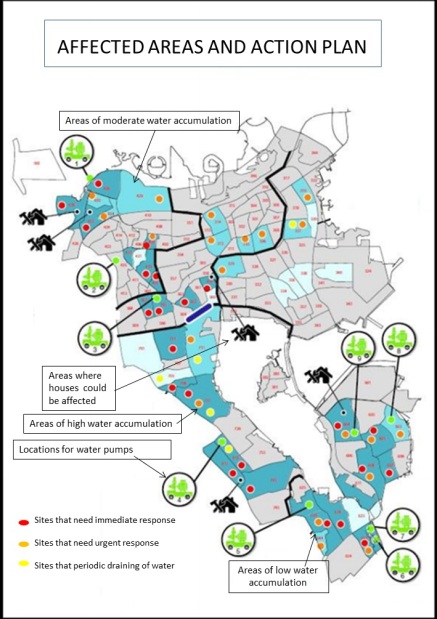
A map showing the rain affected areas and proposed action plan in the Capital Governorate
Mr Al Khayyat listed sites prone to flooding, action plans to tackle emergencies and the role of communication network.
Areas in the Capital Governorate where rainwater gets collected have been divided into high, medium and low risk zones.
“The first set of sites which demands urgent action are those where homes get damaged, sanitation networks are disrupted, traffic is blocked and roads, schools and mosques have to be closed.
“The second area is where traffic obstruction and closure of roads and public facilities are reported along with sanitation problems.
“Finally, the third set of areas that need periodic removal of pools of stagnant rainwater.”
The affected sites have also been divided constituency wise with the 10th constituency comprising the maximum number of flood-prone areas – 18pc, followed by the sixth (17pc), eighth and first constituencies (13pc). The second and third constituencies have the lowest area – 3pc each.
Based on the analysis, the report suggested eight locations for vacuum pumps to be set up. They will be located in blocks 436, 425, 365, 816, 626, 602, 604 and two in 633.
The ministry also has an eight-member team headed by the director general of the Capital Governorate which will implement its emergency communication plan during the rainy season.
The rest of the team, including municipal inspectors and health and hygiene specialists, will oversee the rain preparations and actions.
Meanwhile, Capital Trustees Board chairman Saleh Tarradah told the GDN that the board has already met ministry officials and discussed their plans based on the past years’ scenario.
However, he felt the plan should be more proactive with possibilities of rainwater harvesting explored.
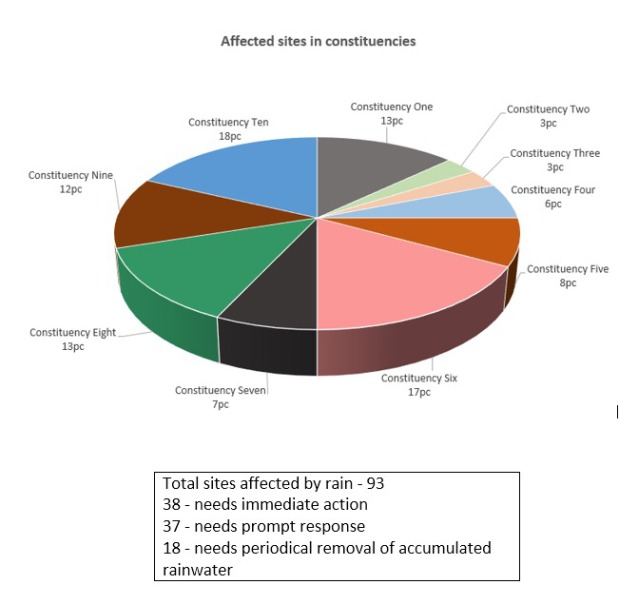
Rain-affected sites in constituencies across the governorate
“Each year we must expect more rain based on the changing climatic conditions and plans cannot be based completely on previous scenarios,” he said.
“We should work towards the future by harvesting rainwater.”
The GDN reported this month that the Northern Governorate was preparing for the rainy season with 10 new pumps and 28 tankers to be deployed in areas, alongside a strategic plan.
The Muharraq Municipal Council has also requested for more water pump trucks to be added to its arsenal of equipment needed to tackle flooding as the ministry only has 10 pumps and officials do not think the number is adequate to respond to heavy downpours.
raji@gdn.com.bh
&uuid=(email))