

MANAMA: Bahrain has been named one of the region’s best fintech ecosystems, second only to Abu Dhabi, in a new report.
Startup Genome’s Global Fintech Ecosystem Report 2020 has listed Abu Dhabi, Bahrain, Dubai and Riyadh, as the leading centres in the Mena region supporting fintech, based on factors including funding, exits, talent and focus as well as ecosystem players including policymakers and founders.
Bahrain and Riyadh were the only two GCC locations named in the report as fintech ecosystems to watch alongside 11 other emerging destinations including Tokyo, Melbourne and Frankfurt.
In the wider Middle East region, Cairo was also included in the list.
The US-based policy advisory and research firm says key factors that give Bahrain the edge include wage subsidy programmes from Tamkeen and the most liberal corporate and personal tax regime in the region as well as the government’s $11.3 billion stimulus package to support businesses and a doubling of the Liquidity Support Fund to $530 million during the global pandemic.
The stimulus package included financial support to insured private sector employees and the government also allowed loan deferrals as well as utility and rent exemptions and fee waivers.
Commenting on the report, Tamkeen chief executive Dr Ebrahim Janahi said: “Bahrain has within a short period of time established itself as an innovative fintech hub, building on its track record as a financial centre, and adopting enabling regulations. We are committed to nurturing new talent for this innovative sector.”
Tamkeen remains a major source of government funding, including financial grants and subsidies.
It is part of a Bahrain-wide support structure for start-ups that includes the Economic Development Board (EDB), the main investment promotion agency; Startup Bahrain, a community-led initiative; local angel networks like Tenmou; accelerators like Flat6Labs and Brinc-Batelco; VCs like Middle East Venture Partners and 500 Start-ups, and Al Waha, a local $100m fund-of-funds.
The EDB’s business development director for financial services Dalal Buhejji said, “Our ranking as one of the top fintech ecosystems to watch is testament to Team Bahrain’s years of hard work building an environment that empowers firms of all sizes to rapidly bring new ideas to market. Our financial services sector is one of the most established in the Gulf region, and we have capitalised on that expertise to enable a shift towards digitalisation – something that has been of particular interest among traditional financial institutions during the global pandemic.”
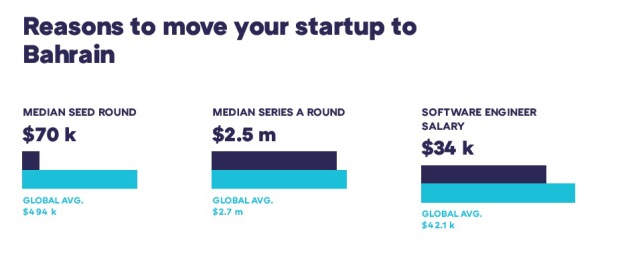
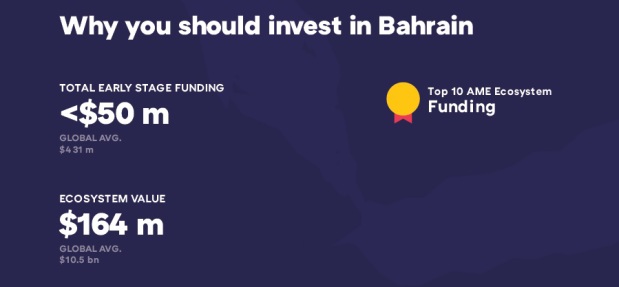
Listing the reasons why businesses should invest in Bahrain, the report says the kingdom’s fintech ecosystem is valued at $164m, and total early stage funding available in Bahrain is just under $50m.
The median seed round funding in the kingdom is $70,000 and the median series A funding, which means the first venture capital funding for a start-up is $2.5m, the Startup Genome report says under ‘reasons to move your start-up to Bahrain’.
“The Bahrain government has reduced capital start-up requirements from $50,000 to $100 for some businesses and introduced a regulatory ‘sandbox’ for fintech,” wrote the report authors.
Currently, there are more than 90 active and diverse fintech companies in Bahrain, which marks a 35pc increase since 2018.
Citing the Global Islamic Finance Report, the report says Bahrain ranks first in the Mena region and second globally in terms of Islamic finance regulation, due mainly to its standards on crowdfunding and open banking.
avinash@gdn.com.bh
&uuid=(email))