

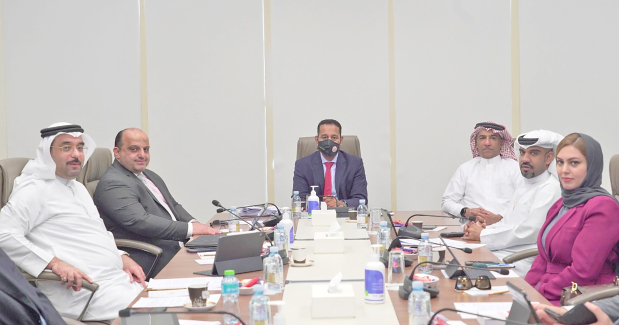
MPs are working to pump more revenues into the national coffers for much-needed projects which have been put on hold due to the financial situation caused by the coronavirus (Covid-19) pandemic.
According to a senior Parliament member, the Cabinet and National Assembly are already negotiating to get funding from Gulf states for projects beyond 2021 when the $10 billion GCC Development Fund would be over.
Parliament financial and economic affairs committee chairman Mahmood Al Bahrani also revealed that there are unofficial talks with large companies and businessmen to take up municipal and developmental schemes and projects.
This came as the committee debated the new 2021-2022 national budget referred to the National Assembly officially on Monday.
Bahrain also received a $10bn bailout in October 2018 from Saudi Arabia, Kuwait and the UAE, which it intends to use to help wipe out its deficit by 2022.
Stable
“Bahrain’s economy is stable as the government rationalised spending and trimmed expenditure,” said Mr Al Bahrani.
“The situation is tough and the government is steering the boat away from the storm just to survive, but there is public demand for schemes and projects which are on hold for lack of funding.
“The government has maintained social welfare in the new budget and is pushing ahead with housing, education and health projects as a priority, but much more is needed.”
Putting a financial burden on people when their livelihoods have been adversely affected is not a good idea, he said.
“We have agreed with the government that there would be no increase in taxes as people are already reeling under the impact of Covid-19.
“We are negotiating with the government to seek a new GCC package or project-by-project funding.
“Another option is to get businessmen and companies to sponsor or partner with delayed projects such as medical units, public parks and schools, amongst others.”
The GDN reported on Monday that Bahrainis will continue to receive subsidised electricity and water rates in their first household in 2022.
MPs clarified that the Cabinet’s decision to exempt the Electricity and Water Authority (EWA) from all government support in the 2021-2022 national budget is in light of the fact that the authority is expected to turn self-dependent by the end of next year.
The government expects to generate BD4.624bn revenue for 2021-2022 – based on a $45 per barrel benchmark price in the global oil markets.
The budget estimates revenues to reach BD2.285bn next year and BD2.339bn in 2022.
Total recurring expenses are estimated to be BD3.296bn in 2021 and BD3.219bn in 2022.
A total of BD656 million has been identified for development projects for each fiscal year, in part taken from the Gulf Development Fund.
The draft budget aims to reduce primary deficit to BD568m in 2021 and BD388m in 2022. Overall deficit estimates stand at BD1.276bn for 2021 and BD1.145bn for 2022.
Objectives
The draft budget law states that the Fiscal Balance Programme has achieved its 2019 objectives.
However, reduced oil revenues, driven by plunging crude prices below estimates, and the unprecedented economic impact of Covid-19 on non-oil revenues, have increased the overall deficit.
It noted continued commitment to control expenditures by reducing government administrative expenses by 30 per cent during the period.
The plan envisages maintaining social support for needy citizens, enhancing public services and optimising efficiency. The government also commits to achieving the goals set in the Fiscal Balance Programme, focusing mainly on boosting non-oil revenues, achieving economic recovery in the coming period and employing jobseekers.
Bahrain’s Cabinet last month increased the borrowing cap from BD13bn to BD15bn to help it continue with planned spending.
mohammed@gdm.com.bh
&uuid=(email))