

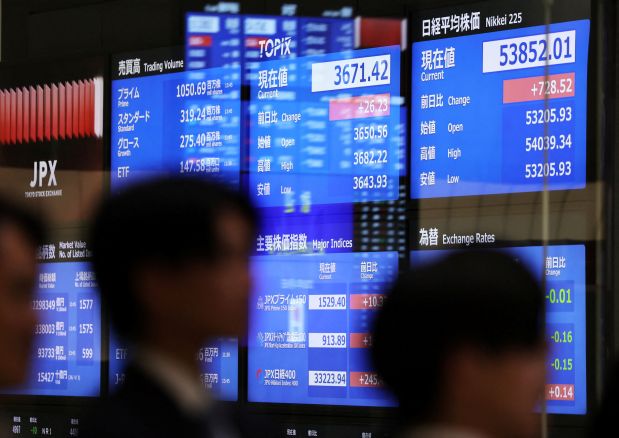
Global stocks wavered yesterday as the looming deadline imposed by US President Donald Trump for a deal with Iran threatened escalation in the Middle East and spooked investors.
Markets have been rattled since the US-Israeli war on Iran broke out at the end of February. That has triggered a risk-off and cautious mood with the US dollar holding on to its gains and oil prices surging.
Europe’s benchmark STOXX index of 600 major companies was flat, while US futures slipped as investors awaited signals as to whether Trump would follow through or renege on his threats to destroy Iranian infrastructure.
A record-breaking quarterly profit forecast from chipmaker Samsung Electronics had earlier helped lift investor sentiment in Asian hours before the reality of the energy shock from the six-week long war set in.
“We are back on a Trump imposed countdown clock and there’s no way to predict with any confidence what will happen,” said Kyle Rodda, senior markets analyst at Capital.com.
“The more intrepid traders might make a bet one way or the other. Others will look to hedge risk or stay out entirely. But there’s not much market participants can really do but wait and see.”
The conflict has spurred worries about stagflation – high inflation with weak or slow growth – upending the global rates outlook, with traders no longer pricing in any rate cuts from the Federal Reserve this year. Data on Monday showed US services sector growth slowed in March, while prices paid by businesses for inputs increased by the most in more than 13 years, an early indication that the prolonged war with Iran was boosting inflationary pressure.
US inflation data is due on Friday which will likely underscore the extent of the pricing pressure from rising energy prices but for now investor attention will be on Trump’s war deadline and whether a deal is agreed. In currencies, the euro was steady at $1.1535. The dollar index, which measures the US currency against six other units, was at 99.99, near its recent highs. The dollar has been the haven of choice among investors during the tumult. The Japanese yen was last at 159.77 per US dollar, hovering near the crucial 160 level that traders have been watching out for to gauge whether Tokyo might intervene in the wake of strong recent comments from officials. Gold prices gained 0.1pc to $4,652 per ounce in early trading.
Emerging market stocks climbed yesterday, cruising towards their third consecutive session of gains as investors weary of the relentless headlines from the Middle East picked winners selectively.
Repeated false dawns and harsh rhetoric from both sides have dimmed investors’ hopes of a swift end to the US-Israel war with Iran, now in its sixth week.
With few assets looking attractive, traders looked harder for pockets of strength.
Czech stocks rose 1.2pc as data showed that surging fuel prices drove a less-than-expected jump in March inflation.
Later this week, inflation figures are also due for Hungary, which is gearing up for an election that is expected to be a tough challenge for nationalist Prime Minister Viktor Orban.
Hungarian equities climbed 1.8pc while the forint rose 0.3pc against the dollar.
In Poland, the equities benchmark rose 1pc and the zloty was flat against the euro, following three straight days of gains.
Elsewhere, South African stocks were largely steady, while the rand was up 0.3pc against the dollar.
The African Export-Import Bank approved a $10 billion programme to help African and Caribbean economies, as well as their banks and companies, counter the severe economic shocks triggered by the Middle East conflict.
In Asia, the Indonesian rupiah breached the 17,100 level against the dollar for the first time, defying the central bank’s efforts to prop it up, as energy shocks and lingering fiscal and governance concerns chased foreign investors away.
“Policymakers will have no choice but to hike fuel prices by up to 5pc in the months ahead. Crucially, Indonesia’s fiscal position was already shaky before the Iran war started,” economists at Pantheon Macroeconomics wrote.
&uuid=(email))