

A total of 2,575 expatriate workers in Bahrain absconded from their workplace from November 2018 until yesterday, it has been revealed.
In the latest statistics disclosed in the Shura Council’s weekly session yesterday, Labour Market Regulatory Authority (LMRA) chief executive Ausamah Al Absi said this reflected a drop of 33.5 per cent (from November 2018) figure of 3,877.
However, he did not give a reason for the drop.
General violations in relation to expatriate workers also dropped, by 29pc, from July 2018 until yesterday – from around 82,000 to 58,000.
Mr Al Absi, who is also the National Committee to Combat Trafficking in Per
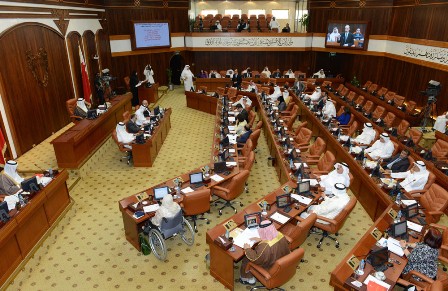
sons chairman, was speaking during the Shura Council’s debate on amendments to the 2006 Labour Market Regulatory Law that would oblige “runaway” workers to buy their own tickets back home or have their relatives pay for their repatriation if they die in Bahrain.
Parliament approved the move in April despite Parliament and Shura Council Affairs Minister Ghanim Al Buainain saying it was unconstitutional, and the move was recommended for approval by the Shura Council’s services committee last week.
Employers are currently obliged to pay return air fares for expat staff when they return home, but some claim they should not be responsible for the tickets of foreign employees who abscond from the workplace.
“The proposed amendment is inapplicable as these workers can’t pay the cost in most cases and this means we have to keep them here until they do so,” said Mr Al Absi.
“The absconding workers don’t have registered bank accounts and should they have any assets we can’t touch them without a court order.”
Shura Council chairman Ali Saleh Al Saleh asked for the issue to be withdrawn indefinitely until an applicable deal was reached.
However, services committee chairwoman Dr Jihad Al Fadhel demanded a precise time when the topic would be rescheduled.
“Members have an exact understanding of what the legislation should look like and it would be difficult to change the stand. We have as often depended on written responses presented to parliament on making our recommendations and we require precise timing for when to return the legislation,” said Dr Al Fadhel.
Shura Council second vice-chairwoman Jameela Nusaif said over the years there were attempts to tackle the problem of runaways, but they never contributed to proper solutions.
“The employer is not at fault for workers running away and the employee in most cases can’t afford paying,” she added.
“But the amendment is right and it would be the job of the concerned ministries, mainly the Foreign Ministry, to tell workers before they come here about the consequences should they break the law.
“This needs to come with a scheme for insurance against fleeing the workplace that sees a fraction deducted from the
monthly wage and returned when the contract is over and there is no fleeing.”
The GDN reported in May that a proposal for a national fund that would pay for the repatriation of expats accused of absconding from work has been presented by two MPs, with it being under study by parliament’s services committee.
The same committee is also studying a proposal presented in September that could oblige housemaids to obtain insurance to pay for repatriation expenses.
The proposal aims to tackle incidents in which housemaids either run away from their employer or break the law.
Services committee chairman Mamdooh Al Saleh told the GDN then the proposed amendments required extensive review because it did not take into consideration that maids were in the low-income category.
He suggested having the deportation insurance included in the initial amount paid by employers to recruitment agencies.
The GDN reported last week that 25,000 expatriates have benefited from Bahrain’s flexi permit scheme in two years and four months.
It was also reported that the overall number of illegal expatriate workers decreased by 25 per cent in 2018 – the biggest drop over the past five years.
mohammed@gdn.com.bh
&uuid=(email))