

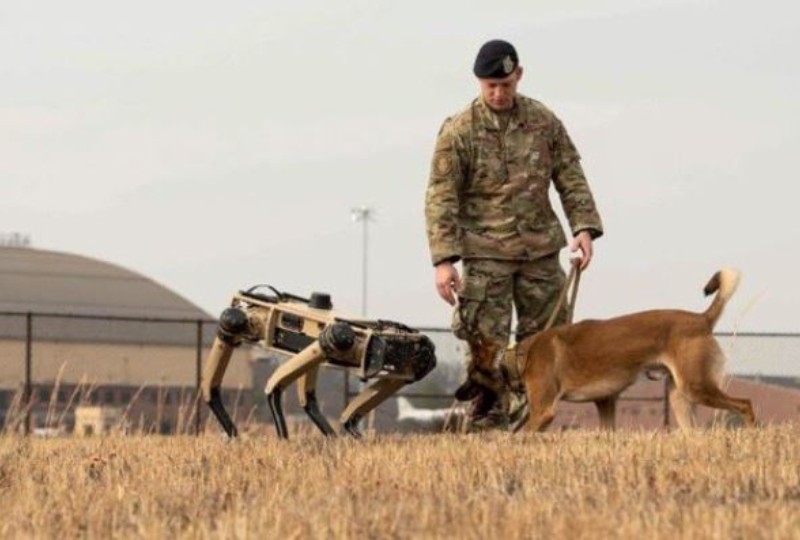
The US Department of Homeland Security (DHS) is testing robots modelled after dogs to patrol the southern US-Mexico border.
The robot dogs, officially named Automated Ground Surveillance Vehicles, were developed in partnership with Ghost Robotics with the aim to reduce risks for humans working in a harsh environment, including rough terrain and extreme temperatures.
"The southern border can be inhospitable to man and beast, and that is exactly why a machine may excel there," DHS science and technology programme manager Brenda Long, said in a blog post.
The robot dogs are outfitted with cameras, sensors and radios to transmit images and can navigate autonomously or be controlled manually by human operators.
They stand at around 76 cms high, weigh 32kgs and can travel over 12 kilometres in three hours on a single battery charge.
ZEB Revo RT LiDAR scanner from @GeoSLAMLtd can be deployed for dangerous & difficult to reach areas for automated site monitoring at construction projects. #constructionindustry #slam #robots #drones More Info: https://t.co/qnUdhMEVMg pic.twitter.com/7s8lQPkBYI
— Ghost Robotics (@Ghost_Robotics) October 28, 2021
The machines can be equipped with thermal or night vision cameras and have been trained to move on asphalt, grass and hills in addition to be able to navigate steps, stairs, steep hills and bumpy terrain.
"Don't be surprised if in the future we see robot 'Fido' out in the field, walking side by side with [Custom Border Patrol] personnel," the blog post read.
