

Today is World Turtle Day and environmentalists in Bahrain have stressed the importance of the species to the marine environment as more than 50 injured sea turtles were rescued and released into Bahraini waters so far this year.
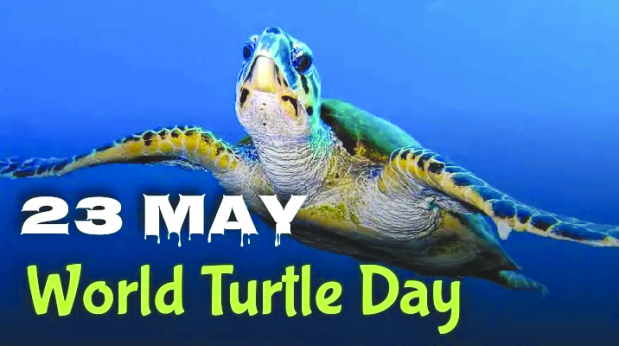
The World Turtle Day, observed globally on May 23 every year, is celebrated to raise awareness among people to protect turtles and tortoises and their disappearing habitats around the world.
The day has been championed since 2000 by American Tortoise Rescue, a non-profit organisation, established in 1990 for the protection of all species of tortoise and turtle.
It is marked in a variety of forms from people dressing in turtle costumes, wearing green summer dresses and research activities, in addition to saving turtles.
Green and Hawksbill turtles are the only turtle species frequently found in Bahrain’s waters highlighted a report published by the General Commission for the Protection of Marine Resources, Environment and Wildlife.
“Up until 2013, sick and injured sea turtles had no one to treat them and we witnessed many dead or clinging onto life, as there was no expert in turtle treatment in Bahrain,” revealed an official statement from the Environment Friends Society.
“We received a call about a turtle on the verge of dying in the same year and we treated her for two months. After naming her Moj (Arabic for waves) we successfully released her back into the sea.
“After that rescue and release we ensured that we learnt the best practices in saving sea turtles while also putting together a specialised team for the task and raising awareness across Bahrain.
“The role played by fishermen and seafarers is critical in saving sea turtles and we are grateful that they took into account our recommendations and advice on best practices.”
Plastic pollution also poses a significant peril, with poisonous thrown away bags being confused for tasty jellyfish and plastic rings and other material trapping them from moving freely in the water.
In 2013 The Bahraini team for conservation of marine turtles and mammals was established, led by the Environment Friends Society and supported by many entities, including the Supreme Council for Environment.
According to the statement, more than 50 sea turtles of varying sizes were rescued and released this year due to timely reporting by fishermen and prompt treatment.
The most recent turtle was released into the ocean last month after treatment and rehabilitation and was named ‘Mariam’.
The Bahrain Diving Volunteer Team Authority (BDVT) has rescued several turtles and co-operated with fishermen to guide them on safe releasing and treatment.
“We managed to save one of the biggest turtles in Bahrain’s waters and it was more than 50-years-old with a length of 1.2 metres and a width of around 900cm,” said BDVT president Khaled Al Saeed.
“The turtle was released later into the open water and safely swam back to her natural habitat in the same night.
“Turtles are critical to provide a balance to the marine ecosystem as they feed on jellyfish and sponges.
“These sponge populations need to be balanced to ensure a fast growing coral reef system as the more jellyfish the slower the corals grow.
“Turtles also help transporting many different marine species through their long migration period such as aquatic hitchhikers like barnacles, algae and diatoms (plankton).”
Mr Al Saeed also added that sea turtles act as ‘an umbrella for fish as protective shelters from different predators’ while also maintaining sea grass beds.
Bahrain-based architect, material resource manager and environmentalist Kai Miethig stressed the importance of sea turtles to the marine ecosystem – even at a disappearing or small population levels.
He added that their roles range from maintaining healthy coral reefs – which are also disappearing locally – in addition to transporting essential nutrients from water to land while also helping to provide balance to the marine food ecosystem.
“Sea turtles help control a variety of other organisms simply by eating them, such as jellyfish, as keeping the amount of jellyfish in check is sometimes an issue here,” he told the GDN. “Jellyfish prey on fish eggs so more jellyfish means less fish.
“Sea turtles also graze on seagrass beds which helps increase the productivity and nutrient content of grass bales as well as preventing them from overgrowing which can obstruct currents.”
Mr Miethig warned that sea turtles and other marine animals are threatened by a range of human activities such as trawling and fishing while torn sea nets strangle them.
He also added that plastic bags dumped in the sea look like jellyfish – which turtles eat – therefore choking them and blocking their digestion channels.
“Sea and beach pollution in general is a big threat as baby turtles – once hatched – are unable to crawl over the trash on the beach,” he added.
“Of course everyone is familiar with the image of the sea turtle with a carelessly thrown plastic straw lodged deep in its nose.
“General pollution is not only a threat to animals but also to humans and all this will come back to us sooner or later.”
reem@gdn.com.b
&uuid=(email))