

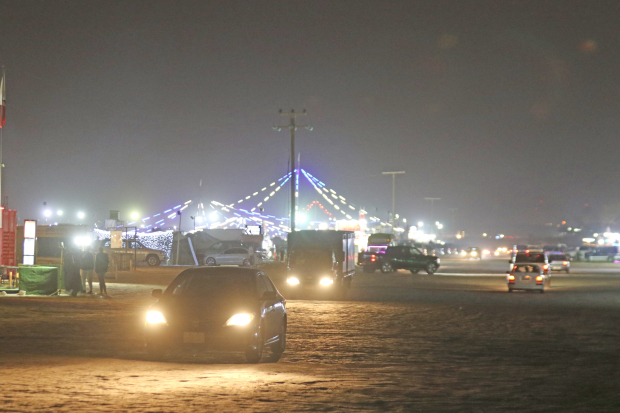
A POPULAR camping site in Awali that attracts thousands of visitors every year must be closed down to pave the way for profitable oil explorations that could boost Bahrain’s economy, councillors have said.
The Southern Municipal Council has called on authorities to cordon off the site at the earliest and impose tough fines on individuals seeking to enter the area.
While the official camping season was cancelled due to Covid-19 more than two years ago, visitors have been pouring into the desert over the past few weeks to take advantage of the cool weather and escape from the city buzz. Many of them were also spotted setting up mini-tents and cooking on portable gas stoves.
Hindrance
“The camping site is rich in oil and mushrooming of tents in the area would hinder excavation efforts,” said council chairman Abdulla Abdullatif.
“The oil we are speaking about is worth millions of dinars and Tatweer Petroleum should be allowed to carry out its work uninterrupted. The country is seeking to increase its revenues to meet financial commitments and we need to support economic recovery efforts.
“Families setting up tents in the area are also endangering their lives as the place is highly sensitive and poses a hazard, if not attended to carefully.
“People, both young and old, are now grilling, cooking and smoking sheesha at the site, besides racing and skidding motorbikes, quad bikes and cars. This cannot go on.”
The council’s technical committee chairman and Sakhir councillor Hamad Al Zoubi said an official declaration on the cancellation of the camping season was a need of the hour.
“The cancellation means a ban and those flouting it should face legal action,” he said.
“The camping season should be fully and permanently cancelled – oil excavations are more important.
“Some people are even camping near drillers and they don’t understand the potential hazards or consequences,” he added.
Awali and Askar area councillor Ali Al Shaikh also backed the demands for a tough clamp to protect the area.
“People can always go to state-owned public parks, gardens, walkways or coastal areas if they want to enjoy the cold breeze,” he said.
“The oil is worth millions of dinars and to us, it is a more of a priority than occupying the place and stopping or slowing down the excavation work.”
Mr Al Shaikh also urged authorities to fast-track the relocation of scrapyards in Askar, that are sitting on crude oil worth multi-millions of dollars.
The GDN reported in February 2018 that Tatweer Petroleum had told former Southern Municipal Council members that between three and four million barrels of oil – worth more than $175 million at the time – had been located onshore, in the area covering both the camping and scrapyards sites.
In August last year, the council gave scrapyards more time to relocate to a nearby site in Hafeera. It appears little movement has taken place despite 21 fire engines and 85 firemen being deployed to tackle a large blaze that ripped through a scrapyard in Askar in July 2021. Flames engulfed scrap vehicles and plastic waste, also igniting wooden cabins and other debris.
Scrapyards have existed on land near Alba for around three decades.
The area’s oil excavations should not to be confused with last year’s announcement that up to 80 billion barrels of shale oil had been discovered off Bahrain’s west coast. Many economists view crude oil as the single most important commodity in the world as it is currently the primary source of energy production.
mohammed@gdnmedia.bh
&uuid=(email))