

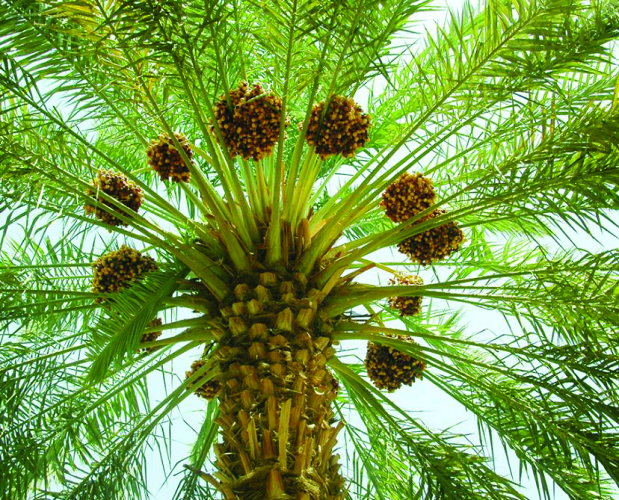
PALM trees have been planted on around 47 per cent of Bahrain’s agricultural land, according to a top government minister.
Municipalities Affairs and Agriculture Minister Wael Al Mubarak told the Shura Council in writing that according to the latest statistics (2011) there were 500,930 palm trees in the kingdom.
Bahrain was once called the land of a million palm trees and local efforts are underway to reclaim the title.
Mr Mubarak added that the government is sparing no efforts to elevate the agricultural sector in Bahrain as it plays a critical role in ensuring the kingdom’s food security.
Measure include the allocation of two plots of land – 3.3 hectares – in Samaheej and Adhari for the second phase of the soil-less agricultural project.
“Efforts are being co-ordinated with the authorities concerned to study a proposal to use additional areas in agricultural production to implement the third phase of the project,” said Mr Al Mubarak, in response to a question submitted by Shura Council member Shaikh Ahmed bin Mohammed bin Ali Al Khalifa.
“The ministry aims to raise the self-sufficiency rate of important vegetable crops in addition to creating a model to be followed in modern agricultural investment.
“Investment in partnership with the private sector is among the goals it seeks to implement to develop the agricultural sector.”
Meanwhile, Works Minister Ibrahim Al Hawaj told the Shura Council in writing that ‘establishing the road network, bridges, overpasses and tunnels aim to facilitate traffic movement and contribute to achieving sustainable development.
He was responding to a question by Shura Council member Hamad Al Nuaimi regarding making use of the spaces available under bridges.
“These intersections are often in vital locations on the main road network, which is considered the facade of Bahrain, therefore the ministry’s plan is to benefit from them for afforestation, beautifying facades and memorials through co-ordination with the competent government agencies,” said Mr Al Hawaj.
“The spaces under the bridges aren’t usually connected to the road network which makes entrance and exit to them dangerous to traffic movement.
“Therefore, the ministry doesn’t recommend the construction of entrances and exits to spaces under bridges to maintain road safety as well as being locations where service cables are installed.”
Mr Al Hawaj also added that should the ministry receive requests for these locations for use as permanent points for ambulances or patrol cars during emergencies they are reviewed to ensure road safety and traffic security.
reem@gdnmedia.bh
&uuid=(email))