

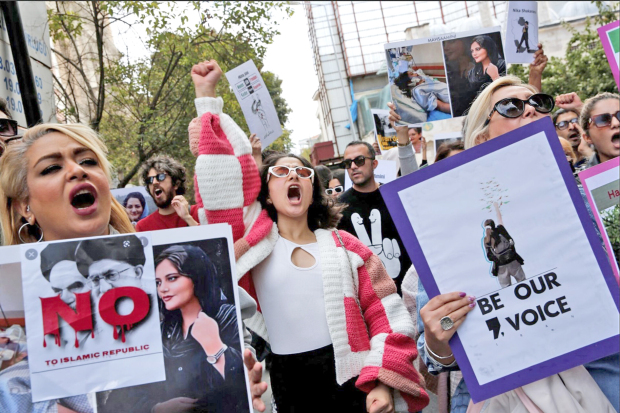
Following our previous column, ‘Bahraini Patriotism… Our Source of Strength in the Face of Aggression’, published last Friday, the broader picture is becoming increasingly clear.
It is now evident that toppling the clerical regime in Iran is not part of the American agenda – regardless of how disappointing this may be for Israel. This divergence in strategic priorities could even widen the gap between the Israeli ‘Star of David’ and the American ‘Stars and Stripes’.
It is deeply regrettable that the Iranian political scene is completely devoid of a national leadership that possesses a genuine patriotic or unifying vision. Therefore, the field remains, for now, open and effectively limited to those who wear the turban.
If we look closely at Iran’s recent history beginning from the Safavid dynasty, we see a specific recurring pattern: The Safavids ruled for about two centuries before collapsing with the rise of Nader Shah who had been the commander-in-chief of the Persian army for a time before becoming a king of Persia. His reign lasted less than 40 years.
The Zand dynasty that followed lasted barely 53 years, only to be replaced by the Qajar dynasty, which endured for about 125 years before giving way to the Pahlavi state, installed with the full blessing of the British Crown.
Thus, we can see that the rule and power shifted from one actor to another with the emergence of new forces on the Persian political and social scene.
The Pahlavi monarchy itself survived little more than five decades. Britain ended its support for the Pahlavi crown and chose the clerical alternative, Ayatollah Khomeini. This was so to such an extent that we, as contemporaries, were astonished at how the British Broadcasting Corporation (BBC) became a media platform and mouthpiece for the clerical revolutionaries.
Today, the political stage in Iran remains vast and open for new actors. Yet, both the British and the Americans appear unable – or perhaps unwilling – to look for a suitable successor to the clerical establishment to rule Iran in the coming period.
Strikingly, Iran has always had a large number of contenders in the race to seize power, and this is the first time in their recent five-century history that the top position is vacant and no individual appears confident enough to claim it. This is because the clerics, over their roughly five decades of rule, worked to strip Iran of its political figures capable of contesting them for power, and entrenched shared interests with the Revolutionary Guard and the other pillars of their rule.
The above brief historical review, spanning five centuries, aimed to highlight a simple truth: Iran is currently suffering from a drought of minds.
The ongoing war has exposed a sobering fact: The Iranian people appear neither prepared nor willing to embark on another political adventure to overthrow the clerics – let alone choose a credible alternative, since none currently exists. Those who created the current state of Iranian society know that the Revolutionary Guard can exert control for a period of time, but it cannot govern – and there is a vast difference between ‘control’ and ‘govern’.
The greater tragedy is that Iran’s potential elites – tens of thousands of academics, economists, and professionals who emigrated decades ago with their families – remain frustrated. Many had left when they were still children, their parents hollowed by despair after the fall of the monarchy and the rise of the clerics. Even today, they look back on their homeland with hopelessness, unable to think of a viable alternative emerging from its parched soil.
Ironically, the only man openly waiting for the ‘right moment’, watching carefully for a nod of approval from Washington to restore him to power, is the Shah’s son – but he lacks the trust of the Iranian people, who have not forgotten what his father and grandfather did.
Today, societies exist under open skies and any nation that seeks progress must refuse to remain confined within closed boundaries. Had Iran allowed its people the freedom to think and express themselves, the nation might have thrived intellectually and politically. Instead, 47 years of authoritarian rule have stifled free thought – even in the darkest moments of its history. The people lack willpower not only inside Iran but even those living in open societies feel unwilling to embrace change and rescue their country from the ravages of war.
I say this as we live in a society that embraces openness of opinion – one whose true strength lies in its rich diversity. In moments such as these, we feel a responsibility to share our perspectives on the events unfolding around us.
The compass that guides us is the homeland first, the homeland second, the homeland third, regardless of whatever our schools of thought or ideological leanings may be.
This is a time for unity in the face of aggression, not a moment for stirring division among us.
This reflection on the current developments stems from a sense of responsibility to consider the possible future trajectories of these events.
It requires us to examine carefully what is unfolding within Iran while reaffirming the importance of safeguarding the foundations of our internal strength as we prepare for any repercussions.
What is to Bahrain’s and the Gulf states’ credit is that they invested in their people and provided them over the years with excellent educational opportunities and a dignified life. Thousands of Gulf citizens were sent in past years to major world universities across various disciplines, which confirms that these countries made human development a priority in their national plans.
By contrast, other countries set their sights on war and destruction, and today they are paying the price for it.
&uuid=(email))