

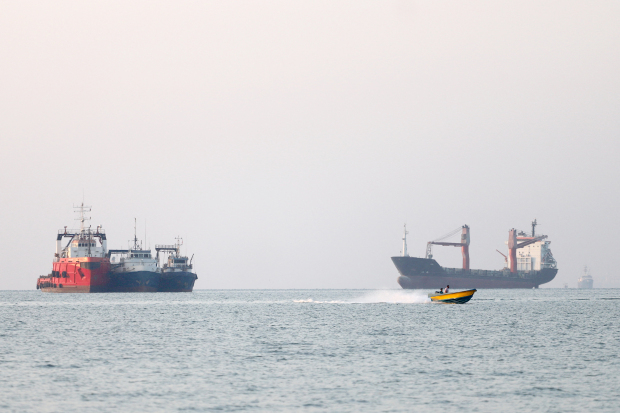
GLOBAL ocean carriers have frozen bookings, imposed hefty emergency surcharges, and structured complex intermodal reroutings for Bahrain following the closure of the Strait of Hormuz to commercial shipping, according to carrier advisories.
The chokepoint shutdown, triggered by underwriters cancelling war-risk insurance for the inner Arabian Gulf, has forced lines to bypass Bahrain’s Khalifa Bin Salman Port (KBSP).
Mediterranean Shipping Company (MSC), the world’s largest container line, has declared an ‘End of Voyage’ for all inner Gulf cargo, offloading Bahraini containers at safe ports outside the chokepoint at the shipper’s expense plus an $800 contingency fee. Germany’s Hapag-Lloyd and China’s COSCO Shipping maintain an absolute booking freeze to the Upper Gulf.
To alleviate operational pressure, AP Moller-Maersk updated its regional network instructions on June 5, formalising a multi-layered bypass.
Under Maersk’s revised strategy, standard ‘merchant haulage’ shipments destined for Bahrain, Kuwait, Qatar, Iraq, and the UAE are being completely stripped out of its Jeddah gateway. Instead, mainline vessels from Asia and Europe are discharging these volumes at Oman’s Salalah and the UAE’s Khor Fakkan.
From those hubs, the cargo moves via a land-bridge network to Sharjah before connecting to final destinations through intra-Gulf feeder networks.
Maersk noted that only local Saudi Arabian imports and specific Bahraini or Kuwaiti cargo moving under strict ‘carrier haulage’ solutions will continue to be handled via Jeddah. The line warned that these rerouting adjustments are subject to additional unspecified charges.
Port operator APM Terminals Bahrain has adapted KBSP to function as an inland clearance depot to process the incoming cross-border truck and feeder influx via the updated networks. Logistics providers warn the rerouting adds 10 to 14 days to transit times, with regional spot rates on some corridors up over 750 per cent since the disruptions began.
avinash@gdnmedia.bh
&uuid=(email))