

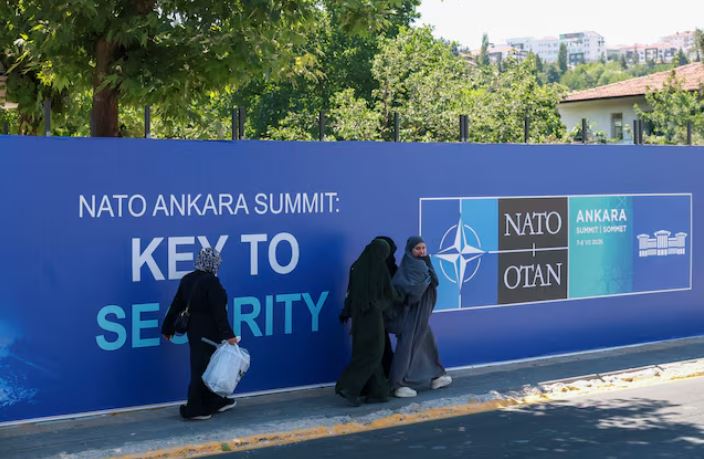
NATO leaders gather next week in Ankara, where Europeans aim to set aside strife with US President Donald Trump over Iran and Greenland and show they are stepping up to defend the continent as Washington cuts back on its commitments to the alliance.
Nato secretary general Mark Rutte says the gathering on next Tuesday and Wednesday will show Europeans are honouring pledges to hike defence spending to deter Russia from any attack, with arms deals worth tens of billions of dollars to be signed.
Leaders are also expected to vow to keep funding weapons for Ukraine’s fight against Russia’s invasion.
Ukrainian President Volodymyr Zelenskiy will attend a dinner hosted by Turkish President Tayyip Erdogan, who will also hold bilateral talks with Trump.
European officials say they hope Trump’s strong relationships with Erdogan and Rutte will ensure a smooth summit but cannot be sure, given lingering transatlantic bitterness over the Iran war and the US president’s frequent criticism of Nato.
In a Truth Social post on Thursday, Trump complained the US was spending money to protect Nato members “without getting any benefit from so doing”.
Rutte and other Nato leaders have insisted the alliance contributes to the United States’ own security and that Europeans are heeding Trump’s longstanding calls to spend more on their own defence.
“The summit next week will focus on turning extra spending into combat-ready capabilities, and significantly scaling up our defence industries,” Rutte said in Berlin on Wednesday.
“Nato is, and will always be, a transatlantic alliance but we need to rebalance it for the better,” he added.
“Working closely with the United States, European allies and Canada are taking greater responsibility for conventional defence in Europe.”
Rutte said last month that Nato’s European members and Canada spent $90 billion more on defence in 2025 than in the previous year, to reach a total of more than $570bn.
In The Hague last year, Nato leaders agreed to spend 3.5 per cent of GDP on core defence items such as weapons and troops by 2035 – up from a previous goal of 2pc.
&uuid=(email))